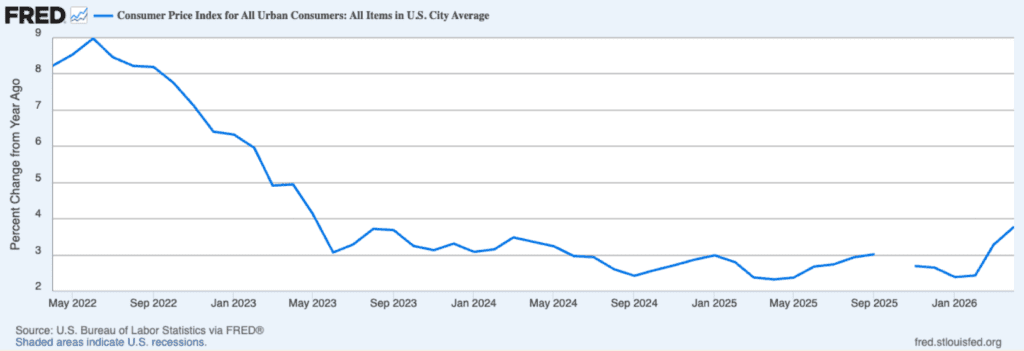
Gains, Pains & Capital argues Fed policy never eliminated inflation, only displaced it across categories and time
Official CPI down from peak levels, but housing still elevated
Insurance costs remain one of the fastest rising major expense categories
Federal interest expense rising above $1T annually, adding fiscal pressure into price structure
Higher rates increasing debt servicing burden across government and private sector
Energy volatility still feeding delayed pass-through into services inflation
Core goods easing while services remain sticky across multiple categories
Gap widening between reported CPI and actual cost burden at household level
Markets increasingly questioning whether disinflation was a peak phase or temporary pause
Cleveland Fed President Beth Hammack says if recent trends continue, rate hikes may "soon" be appropriate
“If we wait for definitive evidence that high inflation has become embedded in the economy, it may require larger policy adjustments, at greater cost.”… pic.twitter.com/mNKwknvssR
— Nick Timiraos (@NickTimiraos) June 2, 2026
Federal Reserve Bank of Cleveland President Beth Hammack said it’s reasonable to hold interest rates steady for now given uncertainties about the economic outlook, but officials may need to act soon to address elevated inflation. https://t.co/EC1fqbYjZb
— Bloomberg (@business) June 2, 2026
The Fed expanded the money supply by nearly $9 trillion under Powell.
Inflation has averaged >4% per year over the past 6 years.
Powell's explanation? It was nearly all due to rolling “supply shocks" over which the Fed has no control.
The truth: this inflation was made in… pic.twitter.com/lbYqlUmH8D
— Charlie Bilello (@charliebilello) May 28, 2026
The Cost Of The Grain That Feeds Half The World Just Posted Biggest Monthly Surge Since 2008 https://t.co/93s9soc7mZ
— zerohedge (@zerohedge) June 2, 2026
The Cost Of The Grain That Feeds Half The World Just Posted Biggest Monthly Surge Since 2008
“Asian rice prices logged their biggest monthly gain in nearly two decades in May, as a Gulf energy shock collides with an expected El Niño event later this year. The spike adds to the mounting risks of a broader food price shock that could emerge as soon as six months from now.
Any time rice prices spike, it is a major concern because the grain feeds more than half the world’s population, estimated at 3.5 to 4 billion people.
Thailand white rice, a regional Asian benchmark, surged 20% in May, the largest monthly increase in data going back to 2008, according to Bloomberg. Chicago rice futures rose 15% last month.”