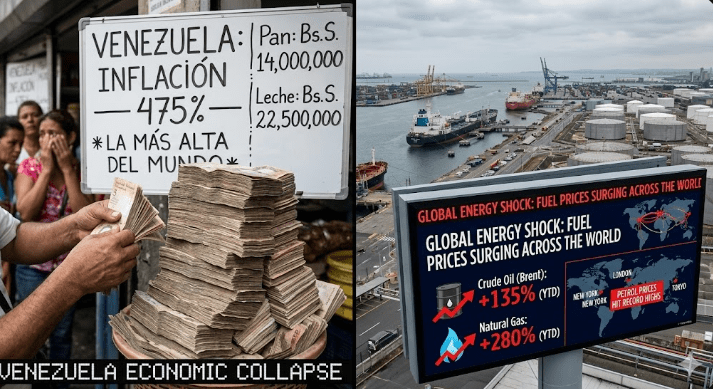
The world is facing a massive surge in prices, and the latest developments suggest that inflation is entering a far more dangerous phase than most people realize.
Venezuela’s inflation exploded to 475 percent in 2025, the highest in the world last year. Food costs soared 532 percent, rent jumped 340 percent, and healthcare expenses skyrocketed 445 percent, leaving ordinary families struggling to survive.
Meanwhile, energy prices are climbing sharply across the globe. Crude oil surged to $94 per barrel, while U.S. gasoline prices jumped 14 percent in a single week, pushing the national average above $3.41 per gallon. Every disruption in the Middle East is being felt in wallets worldwide.
Other countries are starting to feel the strain. Kuwait reduced oil production as a precaution. Pakistan raised retail fuel prices 20 percent, triggering panic buying and long lines. Australia began fuel rationing in some regions. Shipping and airfreight costs have jumped 45 percent, adding hidden pressure to everything from food to consumer goods.
Central banks are warning that inflation pressures could remain stubbornly high. Interest rates are likely to stay elevated. Consumers are paying more while buying less. Real spending is dropping. Everyday life is quietly becoming more expensive.
Put together, these developments paint a deeply troubling picture. Energy costs are climbing. Gas and shipping costs are rising. Food and essentials are becoming harder to afford. Inflation that seemed manageable is proving to be far stickier and more widespread than expected.
What happens in Venezuela, what happens in global energy markets, what happens in shipping and trade — it all connects. People are already feeling the pinch. Families, businesses, and entire economies are being affected.
If current trends continue, the surge in prices could reshape daily life for millions, quietly escalating into a global crisis few are fully prepared for.