April CPI showed food at home up 0.7 percent monthly, biggest jump since August 2022.
Overall food inflation hit 3.2 percent year over year, up from 2.7 percent prior.
Beef, tomatoes and produce leading surges with some categories near 40 percent annual.
Iran conflict energy spike and fertilizer issues adding fresh pressure.
Shoppers report sticker shock ahead of Memorial Day cookouts.
Economists warn more pain possible later in 2026.
This is the exact signal families dread right before summer cookouts.
A sign of economic strength 💯🔽 pic.twitter.com/wQ13WvHowY
— John (@market_sleuth) May 21, 2026
Groceries about to get even MORE expensive…
(NEXSTAR) – Federal inflation data confirms what you may have been feeling already: Groceries are getting more expensive. Unfortunately, things may be about to get a whole lot worse, economists are warning.
The price of groceries rose 2.9% in April compared to the same month a year earlier, according to government figures released in May. That was the highest year-over-year inflation rate for the category since August 2023.
When compared to the same time last year, fruits and vegetables have seen some of the biggest price hikes. Tomatoes are 40% more expensive now than they were this time last year. Bad growing weather, tariffs, and rising fuel prices have all contributed to the huge change in tomato prices, reports the New York Times.
Coffee, another imported product, is 19% more expensive than it was last spring.
You’re also likely seeing inflated prices at the butcher counter. Meat is up 9% overall, but beef has grown even more expensive. Ground beef is about 15% pricier, beef roasts are 18% more, and steak is up 16%.
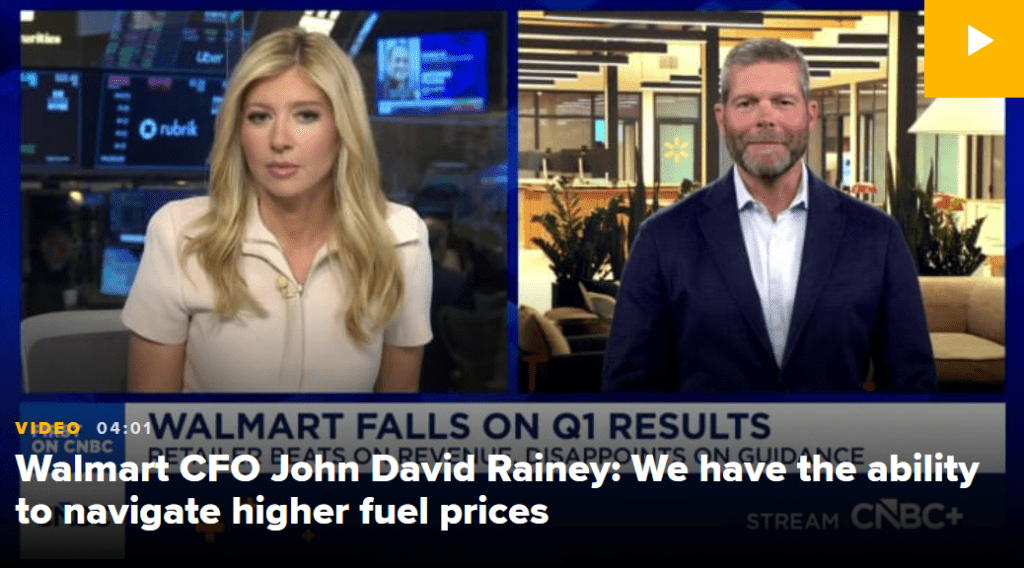
WALMART issues worse-than-expected outlook…
- Walmart issued a worse-than-expected financial outlook amid soaring gas prices.
- Finance chief John David Rainey said high tax returns may have muted some of the impact high gas prices had on shoppers in the first quarter, indicating consumer pressures could rise in the current quarter
- The big-box retailer issued fiscal first-quarter results that beat Wall Street’s expectations on the top line but were only in line on the bottom.