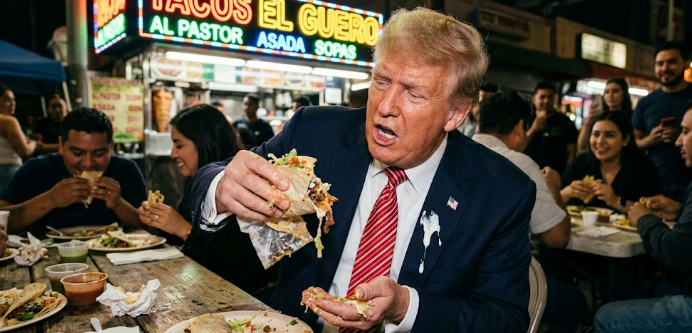
For years, markets have quietly relied on one assumption about Donald Trump.
When things get too dangerous, he backs down.
Traders even gave it a name: TACO — Trump Always Chickens Out.
The pattern is familiar. Trump escalates rhetorically. Markets panic. Then he softens his position or delays the confrontation. The worst case scenario never arrives and stocks recover.
But this time may be different.
Because this war may not give him the option to TACO.
The central issue isn’t simply the fighting. It’s the leverage Iran holds over global energy markets through the Strait of Hormuz.
Roughly 20 percent of the world’s oil normally flows through that narrow passage.
If tankers cannot move safely through the strait, oil prices don’t fall. They surge.
And Iran appears to understand that very well.
More importantly, Tehran has made clear that it is not interested in a quick ceasefire unless several major conditions are met.
According to officials involved in back-channel discussions, Iran’s demands include:
• A binding guarantee that the United States and Israel will not attack Iran again in the future
• A complete halt to ongoing airstrikes and military operations
• Security guarantees enforced through international mediation
• Potential compensation or reparations for war damage
In other words, Iran is not asking for a pause.
They are demanding permanent security guarantees before the war ends.
That creates a major problem for Washington.
Because even if Trump wanted to declare victory and step away from the conflict tomorrow, Iran could simply continue threatening shipping through the Strait of Hormuz.
And as long as that threat exists, global oil markets remain under pressure.
That means energy prices remain elevated.
Before the war escalated, crude oil was trading near $65 per barrel. Since the conflict intensified, prices have surged above $100.
That surge flows directly into the global economy.
Higher fuel costs raise airline fares. Shipping costs climb. Manufacturing costs increase. Inflation pressure returns just as central banks thought it was fading.
Which brings us back to the TACO trade.
Markets are still behaving as if Trump will eventually step back and calm the situation.
But Iran’s strategy appears to rely on the opposite.
Dragging the conflict out may actually work in their favor.
Running a war at this scale costs the United States enormous amounts of money. Military operations, naval deployments, air defenses, and precision strikes quickly add up to roughly $1 billion per day.
Iran, meanwhile, spends only a fraction of that annually on its military.
From Tehran’s perspective, the longer the war continues, the greater the economic pressure on Washington.
Stocks weaken. Oil rises. Recession risks increase.
Iran doesn’t necessarily need to defeat the United States militarily.
It only needs to keep the conflict going long enough for the economic cost to become politically unbearable.
And if Iran continues threatening shipping through the Strait of Hormuz, there may be no simple way for Trump to declare victory and walk away.
Which means the TACO trade that markets have relied on for years may not work this time.
And if that assumption proves wrong, the next phase of this conflict may not be de-escalation.
It may be escalation.