Tomorrow marks ten years since the Brexit vote.
And the funny thing is that both sides can point to the same numbers and claim victory.
Brexit absolutely changed immigration.
The UK ended free movement with the European Union.
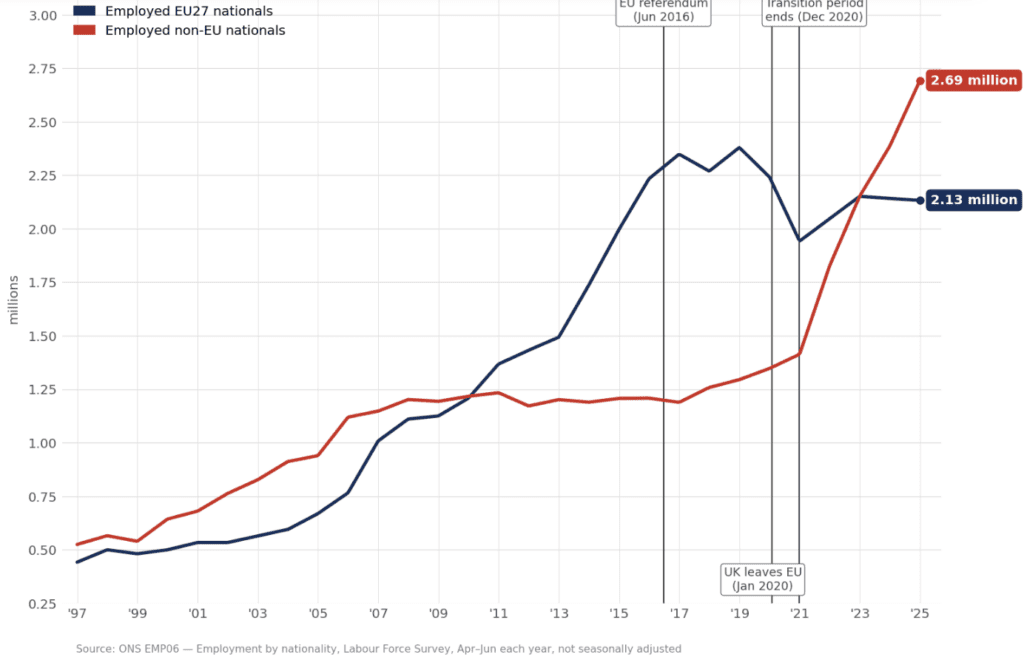
Hundreds of thousands fewer EU workers are in Britain than many economists expected before Brexit.
That part happened.
But then something else happened.
The workers did not disappear.
They were replaced.
The new points-based system opened the door to much larger flows from outside Europe.
Health care workers.
Care workers.
Skilled workers.
Students who later entered the labor force.
As EU migration fell, non-EU migration surged.
The result?
Britain ended up with more foreign-born workers than before.
That is the part many Brexit voters did not expect.
The political promise was often understood as reducing immigration.
What Britain actually did was change where immigrants came from.
The numbers tell the story.
Net migration eventually hit a record 944,000.
It has since fallen sharply, but the overall workforce remains far more international than many people imagined on referendum day.
What makes this so interesting is that Brexit may be one of the biggest examples of people getting exactly what they voted for and not getting what they expected.
Britain did regain control over immigration policy.
That happened.
The government gained the power to decide who comes in and from where.
But once politicians had that power, they did not reduce migration the way many voters assumed.
They redesigned it.
Ten years later, Brexit did not produce a Britain with fewer foreign workers.
It produced a Britain with different foreign workers.