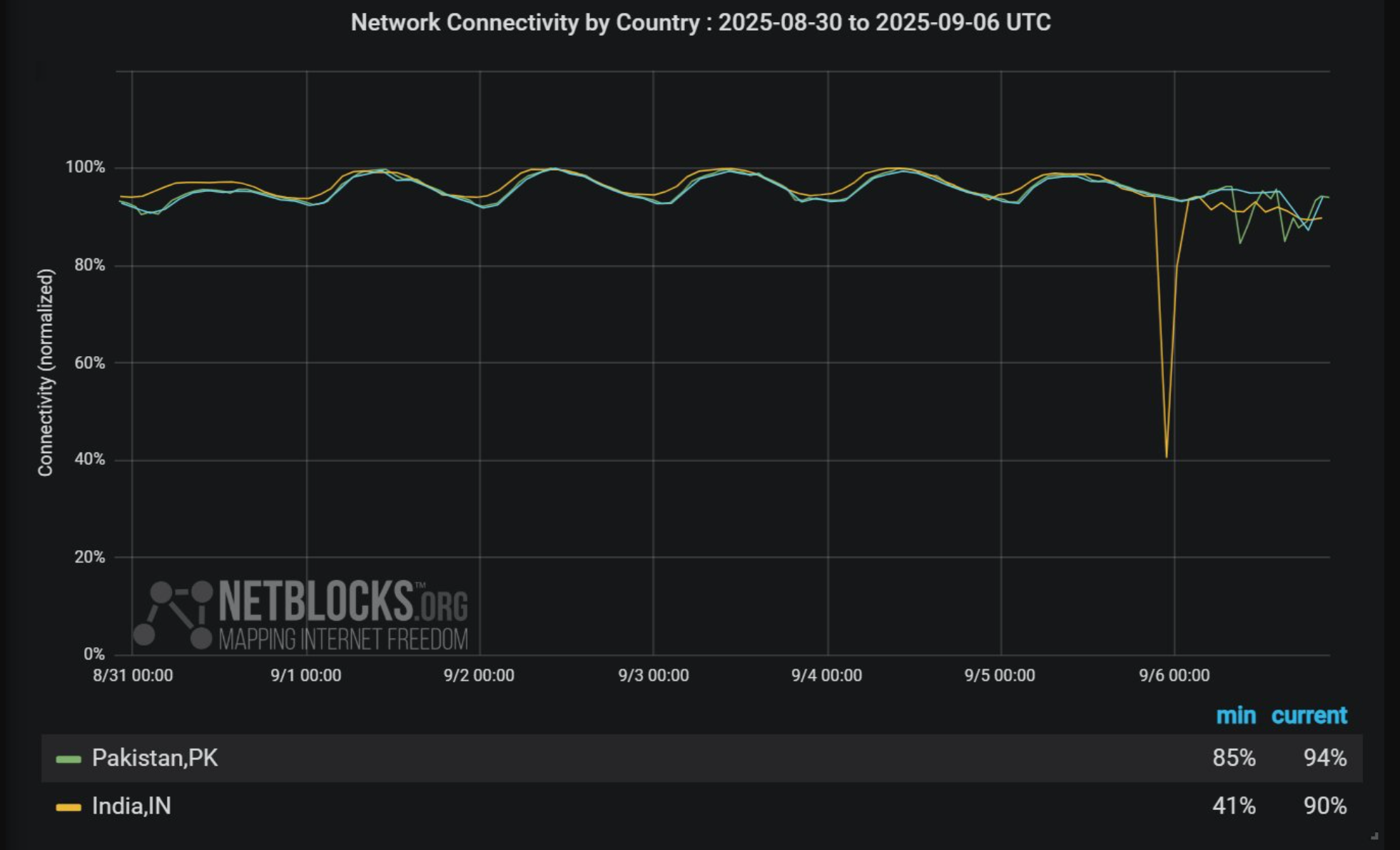
Something ruptured under the surface and the quiet around it feels louder than the break itself. At 05:45 UTC on Saturday, multiple subsea cables were severed in the Red Sea, triggering internet outages across Pakistan, India, and the United Arab Emirates. Microsoft called it a “service degradation,” but the phrase barely hides the scale of what happened. The SMW4 and IMEWE cable systems carry critical data between Asia, the Middle East, and Europe. Cutting them does not just slow traffic. It slices through the digital backbone of entire regions.
⚠️ Confirmed: A series of subsea cable outages in the Red Sea has degraded internet connectivity in multiple countries including #Pakistan and #India; the incident is attributed to failures affecting the SMW4 and IMEWE cable systems near Jeddah, Saudi Arabia 📉 pic.twitter.com/cLsO3cxKbI
— NetBlocks (@netblocks) September 6, 2025
“Azure traffic going through the Middle East may experience increased latency due to undersea fibre cuts in the Red Sea.”
https://www.msn.com/en-us/news/world/microsoft-cloud-services-disrupted-by-red-sea-cable-cuts/ar-AA1M3Q81
“Undersea fiber cuts can take time to repair, as such we will continuously monitor, rebalance, and optimize routing to reduce customer impact in the meantime.”
https://www.cnbc.com/2025/09/06/microsoft-azure-cloud-computing-service-disrupted-red-sea-fiber-cuts.html
“Microsoft Azure users may experience increased latency due to multiple undersea fiber cuts in the Red Sea.”
https://www.financialexpress.com/life/technology-microsoft-warns-of-higher-latency-for-azure-users-amid-fibre-cuts-in-red-sea-3969474/
“The incident, which began at 05:45 UTC on Saturday, September 6, is causing increased latency for global customers whose data traffic passes through the critical Middle East corridor.”
https://winbuzzer.com/2025/09/07/microsoft-azure-hit-by-network-latency-after-red-sea-undersea-cables-cut-xcxwbn/
BREAKING – Massive internet connection problems are being reported in parts of Pakistan and India after Microsoft confirmed that multiple subsea cables were cut in the Red Sea.
— Right Angle News Network (@Rightanglenews) September 6, 2025
Microsoft has not said how the cables were damaged. That silence matters. The Red Sea is a known flashpoint. Multiple cables were hit near Jeddah, a critical chokepoint, and that should not be treated as coincidence. The region has faced warnings of sabotage before, including threats from the Iran-backed Houthi movement in early 2024. Yet no official has confirmed whether this was an accident, an attack, or something else entirely.
Traffic is being rerouted to keep services online, but there is a price. Speeds slow, latency rises, and millions of users see degraded performance. Azure supports banking systems, supply chains, and streaming platforms. When latency spikes, it is not a small annoyance. It is a disruption with real economic cost. Microsoft insists other services remain unaffected, but the longer-term impact on cloud operations, data centers, and global routing could be significant.