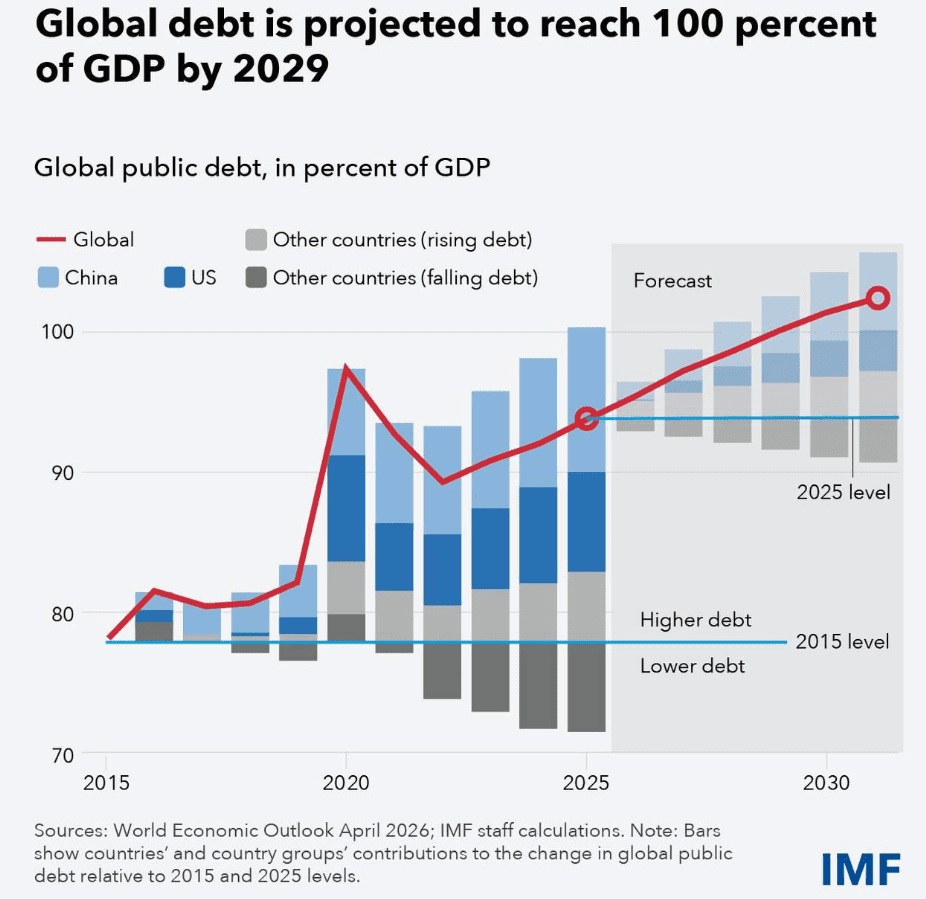
The world is moving back toward a debt level that used to be associated with the aftermath of major wars. According to the IMF, global public debt reached 93.9% of GDP in 2025 and is projected to hit 100% by 2029. What makes that more striking is that this is not the result of one single global catastrophe. It is the result of years of persistent deficits, higher interest costs, and repeated geopolitical and economic shocks.
The second point is that this is not really a story about every country sliding in the same direction. The IMF says the projected rise in global debt is driven largely by the United States and China, while some countries with falling debt ratios provide only a limited offset. At the same time, interest payments have risen from 2% to nearly 3% of global GDP in just four years, which means the debt problem is no longer only about new borrowing. Old debt is getting more expensive too.
What that changes is the room governments have when the next shock arrives. The IMF says the global fiscal cushion that existed a decade ago has almost disappeared, and that the window for orderly adjustment is narrowing. In practice, that means harder trade-offs: more budget pressure from interest bills, less space for broad subsidies when energy prices jump, and more pressure to choose between taxes, entitlement spending, defense, and other priorities. In countries already relying on external financing, higher borrowing costs can spill over even faster.
Sources:
IMF | Fiscal Monitor, April 2026
h/t bradnobred