Something inside Europe has shifted. The fear that kept people silent, the complacency that kept governments blind, both are breaking.
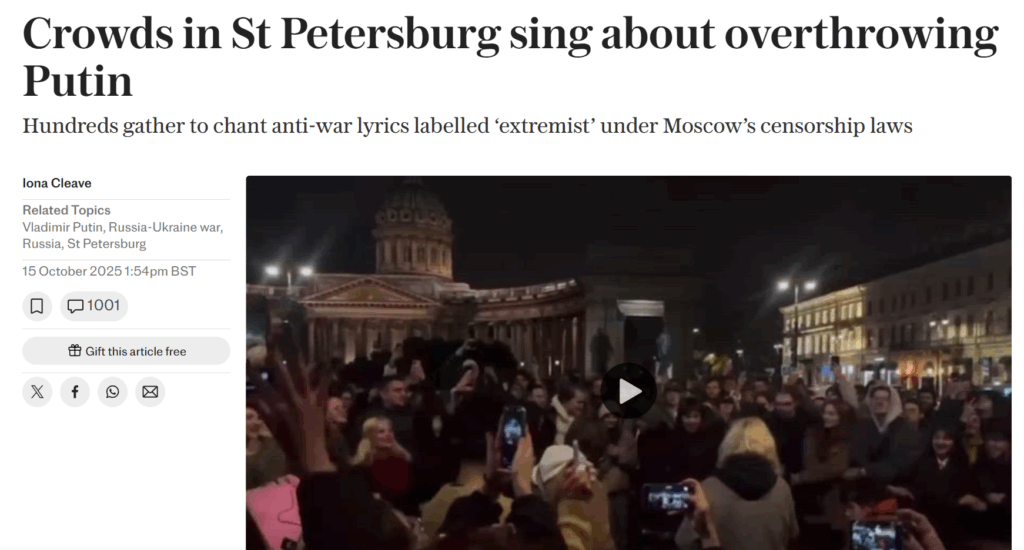
In St. Petersburg, thousands began singing a song banned for nearly two decades, a song about overthrowing Putin. The Telegraph described it as an “unexpected outburst,” but it was more than that.
“Crowds in St Petersburg sang the protest anthem ‘Changes,’ long forbidden under Putin, as police looked on uncertainly… many joined in before authorities cut the power.”
That moment told the truth the Kremlin will not print. Power was not cut to stop noise, it was cut because fear of the people is returning. Each time Russians have sung that song before, the state has fallen within years. The last time was 1989. The pattern is never random. If you watch long enough, you can feel the timeline reset.
Meanwhile, the battlefield has become quieter and deadlier. The Sun reported that Russian engineers are now producing cheap, swarm-capable drones meant to flood European skies.
“Russia could unleash thousands of mini-drones designed to fly low, swarm radar defenses, and strike infrastructure before interception.”
Western militaries still think in decades, but these drones are designed in weeks. One defense analyst quietly admitted the swarm could overwhelm Europe’s air defenses in less than 20 minutes. If only 10% reach targets, hundreds of substations and ports could be gone within hours.
Governments will say this is posturing. They said the same about Crimea, Nord Stream, and energy blackouts. The pattern always starts with denial, then surprise, then paralysis.
And now Sweden, long the symbol of calm neutrality, is taking an action no Western nation has taken in a generation: it is stockpiling food again. Metro UK confirmed it bluntly.
“Sweden will begin building reserves of grains, oils, and critical goods — the first such program since the Cold War.”
Officials avoided the word war, but logistics experts estimate a minimum reserve goal of six months’ food for every citizen. That quietly signals Stockholm expects major supply disruption, not someday, but soon. If even two other EU nations follow, trade routes could seize up within 90 days.
European leaders keep saying “peace must prevail,” but their own planners are drawing blueprints for isolation. You do not hoard food for diplomacy. You hoard food because you expect systems to break.
The media calls it precaution, but the tone is too calm for the scale of preparation. When governments prepare quietly, history never stays quiet for long.