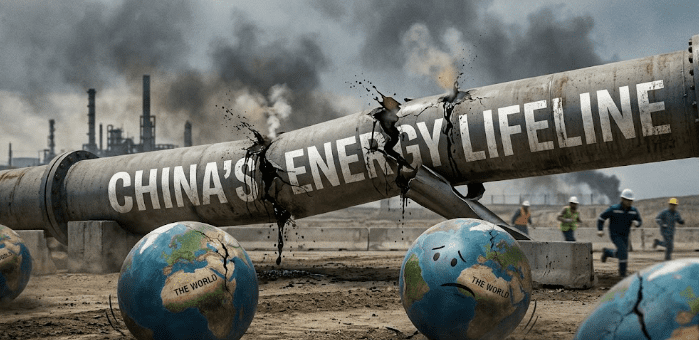
China’s industrial system depends heavily on fuel it does not control. Its factories, ports, shipyards, and military production all rely on imported oil and LNG to keep operating. That dependence means any disruption in supply routes or supplier stability is felt quickly inside the system, often before there is time to adjust.
A significant portion of that supply comes through regions that are not always stable, and some of China’s lower cost sources sit in areas that are already under geopolitical pressure, including Iran and Venezuela.
One of the most sensitive points is the Strait of Hormuz. The Guardian has reported that tanker traffic through the area has slowed, while shipping costs and insurance premiums have increased. In response, China has even called for additional protection for vessels moving through the region. When a chokepoint like this becomes more difficult to use, the effects show up quickly across the supply chain.
The impact does not stay confined to that single route. Le Monde notes that shipping companies have begun avoiding the Strait of Hormuz where possible, rerouting vessels around Africa instead. Those longer routes add significant time to deliveries, reduce the number of tankers available for rotation, and increase overall transport costs. Trade continues, but it becomes slower and less efficient, which matters for countries that depend on steady inflows of energy.
At the same time, Venezuela represents another piece of China’s supply mix that has faced disruption. The Washington Post has reported on U.S. actions affecting Venezuelan oil exports and the way those barrels reach global buyers. China has at times relied on Venezuelan crude as a discounted alternative, so any limitations in that channel reduce flexibility in sourcing.
U.S. defense spending has also climbed to very high levels compared with past periods, and that alone stands out. At the same time, pressure on shipping routes and energy supply is building in more than one region, including the routes China depends on for a large share of its fuel. Put together, these conditions affect how fuel moves, how long deliveries take, and how markets respond when supply becomes less predictable.
-DR