We often discuss the connected nature of the economy – how two completely separate things affect one another. Today, a sudden slump in cardboard demand indicates rising recession risk – at the very moment when families have less savings to fall back on…
By Peter Reagan
In the world of poker, professional players will often talk about being able to see a “tell” that another player shows.
If you’re unfamiliar with a tell, it’s an unconscious, usually overlooked, signal from a person that unconsciously telegraphs what is going on with them… if you know what to look for.
For example, a player may have a tell where their right eyebrow may arch slightly when they have a good hand. If another player notices that tell, then, when the player arches their right eyebrow slightly, the noticing player knows that they should consider folding that hand quickly to minimize their losses (and minimize how much the other player gains).
Of course, the reverse is true, too. If the player being observed doesn’t arch the eyebrow, then the player noticing has reason to believe that the other player doesn’t have a strong hand.
And these often overlooked signals can give a wealth of information to those who know what to look for.
The thing is that the vast majority of people simply don’t know what to look for.
That same problem exists when looking into economic indicators.
An economic tell
If you’re not in the shipping industry, you probably aren’t familiar with this first tell, but you’re certainly familiar with what is causing the situation.
Ryan Dezember with The Wall Street Journal tells us what the situation is:
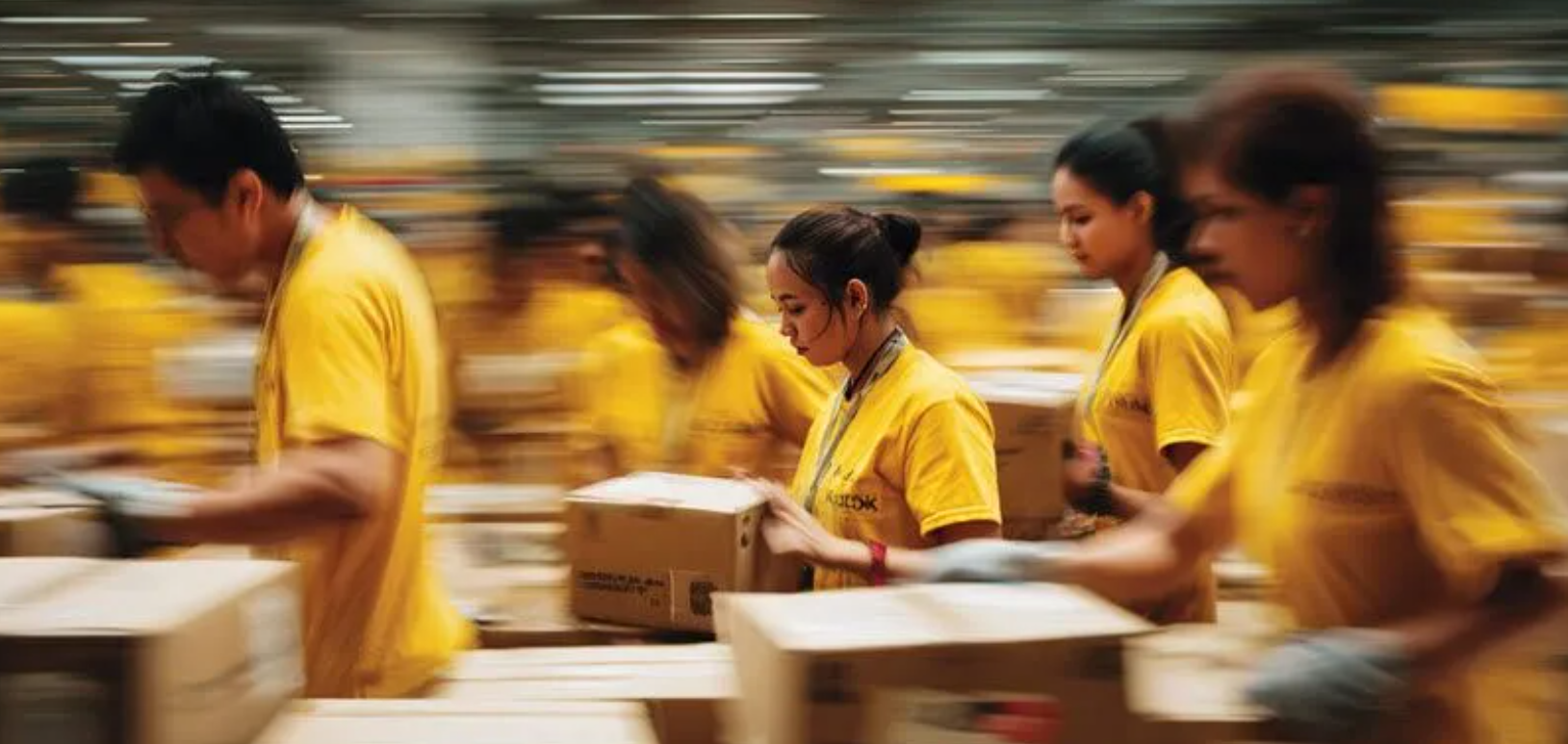
Cardboard-box demand is slumping, flashing a potential warning about the health of the American consumer given that goods ranging from pizzas to ovens are transported in corrugated packaging.
A historic run of pulp-mill closures is also signaling problems for the companies that make corrugated packaging as well as the timberland owners who sell them wood.
No doubt some people will write this off as simply a downturn in those industries as happens from time to time or that happens as technology advances and causes changes in different sectors of the economy (in the same way that vinyl record manufacturers disappeared when compact discs came to market).
That’s not the case, though. Analysts and box manufacturers blame tariffs and economic uncertainty, as well as the frozen housing market (nobody is buying boxes to move house).
So, the cardboard industry’s decline is a tell that shows that there is less consumer spending and demand in the marketplace. And that’s the underlying cause that we need to be concerned about.
Less consumer demand means less consumer spending. Never forget that consumer spending makes up a shocking 70% of total economic activity… Which means that pullbacks in household spending are a powerful indicator of a looming recession.
And nobody really wants a recession to happen.
The signs are showing in other ways, too…
The signs of economic stress and struggle are showing in other areas, too, if you know how to find the information. Muskaan Arshad with Fortune gives us another scary economic tell:
That’s according to a new survey by Empower, a retirement and financial services company, which found 32% of Americans have no emergency savings set aside.
To put that into perspective, most financial advisors recommend saving at least 20% of your monthly paycheck for retirement and for emergencies. But people aren’t able to do that after paying the bills.
And the difficulty isn’t uniform across the board: Those who are early into their working years are struggling more than retirees. Gen Z have, on average, just $400 in emergency funds.
That’s the real world that more and more Americans are living in now, and they aren’t just saying that in a survey. They feel it, too, on a visceral level. Brett Rowland with The Center Square writes:
Most Americans say the U.S. economy is getting worse, according to new polling released Monday.
How many think that? Well, 28% say the economy is excellent or good. The majority, 63%, think the economy is getting worse.
Now, with some polls my tendency is to think, “So what?”
The problem is that, when it comes to how people feel about the economy, it affects their spending habits. If they feel that the economy is strong and growing, they feel better about spending a bit more because they feel like they can get extra hours at work or that they can get a better paying job.
The reverse is true, too. When people feel that the economy is struggling, they start to feel vulnerable and start saving (if possible) to prevent finding themselves in a position in which they can’t pay their bills.
And when people don’t buy products and services, the companies that offer those products and services don’t get that business.
In a very real way, when consumer confidence is low, this can become a self-fulfilling prophecy that actually causes the economy to weaken.
How can you protect yourself?
Smart people will ask how they can protect themselves from what could become a very real overall economic downturn.
It’s a smart question. And there are a couple of answers to that question.
The first answer is to find ways to bring in more income. More income can relieve stress as prices and the cost of living rise. On the other hand, if you could increase your income, you probably already would’ve done so.
Whether or not you’re able to increase your income, there’s another thing you can do to insulate yourself and your family from the economic damage a recession causes. Build up your emergency fund to help you ride out short-term hiccups. Longer-term, make sure to diversify your savings with inflation-resistant investments. Whatever happens with the economy, by taking these steps you’ll be better equipped to pay your bills and care for yourself and your family.
Longer-term, I believe it’s wise to diversify with physical precious metals. Not only are they inflation-resistant, but their diversification benefits can help you grow your savings over the long term. (Nothing holds up during a recession like the price of gold. Click the link to see for yourself!)
If you want to learn more about the benefits of diversifying with physical precious metals, you can start your due diligence by requesting your free Precious Metals Information Kit. Alternately, if you’re ready to get started with diversifying your savings today, our Precious Metals Specialists are standing by at 1-877-749-7738 to answer any questions you might have.
Remember, whether or not this collapse in cardboard box demand and consumer sentiment really do indicate an imminent recession, over the long run, recessions are inevitable. That’s why it makes sense to diversify with assets that tend to do well during economic rough patches. Even if they don’t benefit you tomorrow, over the long term, you’re very unlikely to regret owning physical precious metals as “financial insurance.”