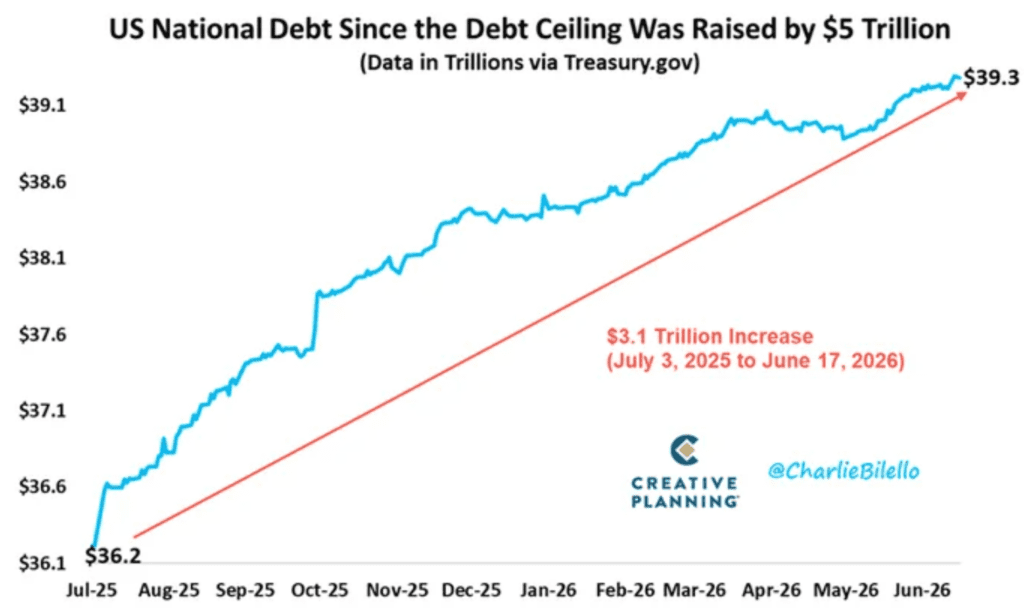
The numbers are starting to stack up.
The US debt ceiling was raised by $5 trillion in 2025 through the One Big Beautiful Bill Act.
The new limit is now around $41.1 trillion.
That gives Washington more room until 2027.
But the market is watching something else:
The cost of carrying all that debt.
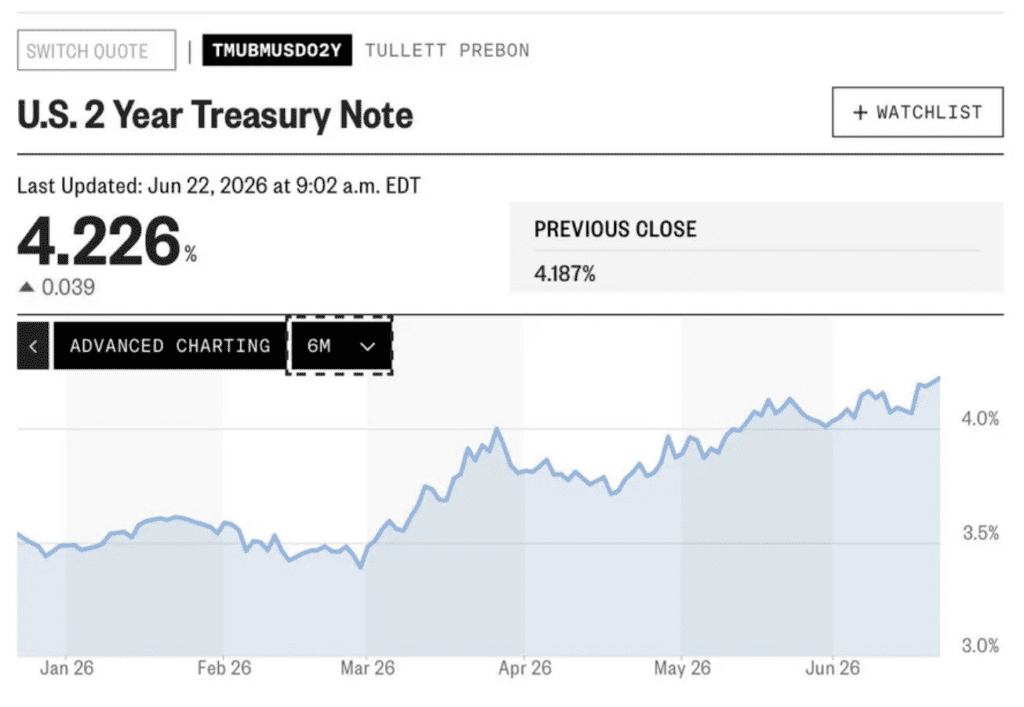
The 2-year Treasury yield recently climbed near 4.24%, close to an 18-month high.
That matters because short-term Treasury yields influence borrowing costs across the economy.
Higher yields mean more expensive loans.
Mortgages.
Business borrowing.
Consumer credit.
Everything gets harder when the cost of money rises.
Then households get hit from another direction.
Summer electricity bills are expected to rise around 8.5% to 10.5% this year.
The average household could spend around $792 from June through September.
Some states are seeing double-digit increases.
So the pressure looks like this:
More government debt.
Higher interest costs.
Higher utility bills.
And families already dealing with expensive housing and everyday costs.
The debate in Washington is always about spending more versus spending less.
But eventually the bill shows up somewhere.
Sometimes it appears in taxes.
Sometimes in interest payments.
Sometimes in the monthly bills sitting on your kitchen table.
And right now, more Americans are starting to feel those numbers.