For generations, Americans improved their lives by moving toward opportunity. Today, that mobility is breaking down. Home sales remain frozen despite lower rates – revealing a deeper economic problem that leaves families stuck, limiting economic growth…
By Peter Reagan
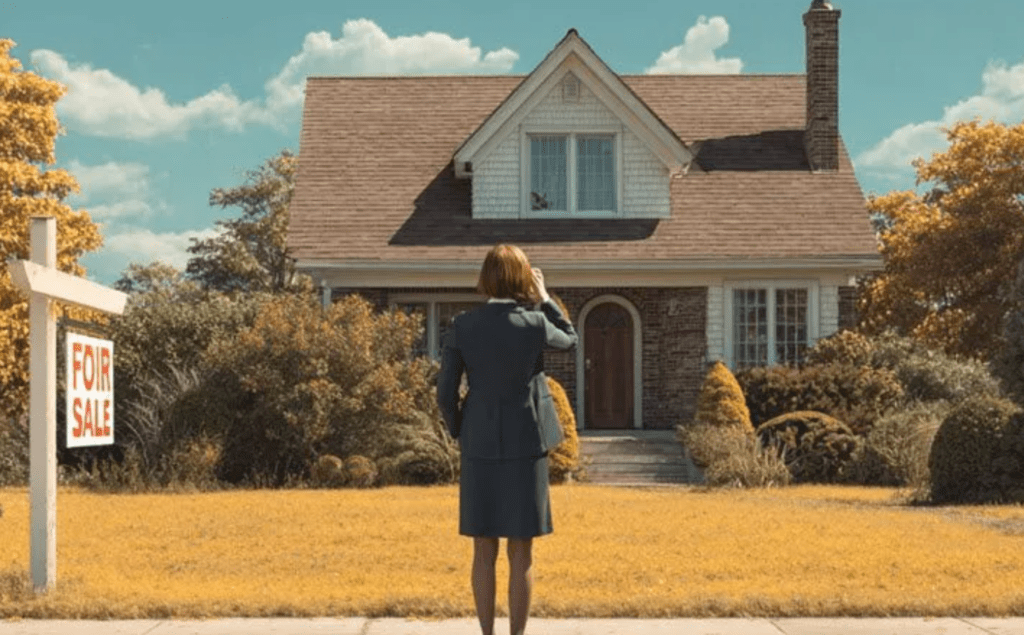
One of the quiet advantages Americans have long taken for granted is the ability to move – not just up the social ladder, but across the map. If opportunity dried up in one place, families just packed up and went where the work was.
That freedom to relocate, to chase a better job, a safer neighborhood or just a fresh start, has always been a core part of how Americans improved their lives almost since the beginning of the country.
Today, that freedom is slipping away. Not because people don’t want to move, but because they no longer can.
That’s a bold claim – so I’ll show you the data, and then explain what it means.
Home sales flat for three consecutive years
Home sales are a vital part of picking up and moving to another city or state. When you relocate, you need to sell your current home and find a new place to live. Selling a home to buy a new one is, for most of us, a financial necessity.
How else do you have a downpayment? Who can afford two mortgage payments (along with insurance and maintenance)? Even if you could swing it, do you really want to play landlord in Memphis from your new home in Miami?
Even for folks who don’t plan to buy a new home right way, who figure they’ll rent for a year or two before settling into a new home – financially, they almost always need to sell their old home first.
That’s why this is a concerning trend: Home sales are flat. They’ve been flat for years, and there’s no sign of recovery.
For example, take this chart from MishTalk:

Right about three years ago, home sales reached the bottom of a declining trend. That trend coincides with the peak of the pandemic panic era housing boom, by the way, rising an astonishing 45% in just under three years.
Take a look:

So prices shot up – sales plunged, and haven’t recovered since.
That’s right, we’ve had three years with home sales 50% below their pandemic-era peak.
This tells us several things…
Fewer families are moving house.
Which means they aren’t relocating to take advantage of a higher-paying job, or a better school district – or just better weather.
They’re stuck.
An economist might say that financial and social mobility in the U.S. has declined. And it’s not improving.
Why not?
Why can’t families buy (or sell) their homes?
It’s not just one thing Fortune’s Jason Ma gives us a thumbnail sketch:
Home sales flatlined amid unaffordable conditions after rising demand collided with tepid supply growth, pushing up home prices. Would-be buyers became so discouraged that demand cooled and remains slow.
Translation: Prices surged due to rising demand that wasn’t met by supply. Blame zoning laws or NIMBY cities or corporate homebuilders – it doesn’t matter where we point a finger.
Ma’s interpretation is that people who wanted to buy a home and couldn’t eventually just gave up. That’s nonsense. Oh, I’m sure it happened in a few cases, but overall supply and demand solve a mismatch like this with price.
When lots of people want something, prices go up. When supply is limited, prices go up.
What happened in this case, though? Prices went so far up that buyers could no longer afford a home.
Way back in February, the National Association of Home Builders warned over 75% of American families cannot afford an average home. (Home prices have risen 1% on average since then.) Now, I’ve discussed this issue before, and I’m bringing it up again because it’s important.
Today, the “median” (typical) home costs $409,200. Median household income is just under $84,000. Since lenders cap mortgages at 30% of pre-tax income, the typical family can afford a mortgage payment of $2,100/month. I did the math – with a 10% downpayment, a typical family can afford a $300,000 home at most. (Significantly less without good credit.) That’s not enough.
Even though, as Mike Shedlock points out, mortgage rates have fallen a full percent since that NAHB announcement.
It’s not buyer discouragement that’s keeping home sales flat. It’s affordability.
People always want to do better. They have an insatiable desire to improve themselves and their situations, to provide as best they can for their families, to live in safer and more pleasant neighborhoods.
But, today, right now, the vast majority of American families simply cannot.
Prices too high to buy, mortgages to steep to sell
Even those fortunate families who owned a home before the 3-year, 45% price explosion are often finding themselves locked into their home.
Today’s seller generally has a 3% or lower mortgage rate. Even if the found a buyer who could afford to pay market price for their old home, now they’re looking at taking out a mortgage at twice the rate (6.3% right now) for their new home.
That’s not much of a problem, though, because the vast majority of buyers can’t afford market prices. Zillow tells us that, right now, more than half of Los Angeles home sales change hands at below market price. (If you’ve ever sold a home, you already know how hard it is to accept an offer at below-market prices anyway…)
Today’s housing market is frozen. Homeowners are locked in, as I’ve described – and homebuyers are locked out.
This is a real problem for the entire economy, though – not just homeowners and aspiring homeowners. Investment firm TCW explains:
The low turnover directly dampens spending linked to moving, such as on furniture and home improvement. More fundamentally, with households forced to allocate a record share of their income to shelter, there is simply less left over for everything else, creating a persistent headwind for broad discretionary sectors like travel, entertainment, and apparel.
(Their entire report is worth a read.)
People haven’t changed. Families still want to be economically and socially mobile. They still want to move up to a higher rung on the ladder, and the only reason that they aren’t doing so is because they can’t.
And I’m not just pulling that conclusion out of thin air.
I’ve talked about how 71% of homeowners are putting off renovations, even necessary renovations because they aren’t sure that they’ll be able to continue to pay their current bills, much less the extra cost of a renovation of part or all of their home.
I’ve also described how every sector of the economy is posting job losses. The vast majority, 77% of American families, say they’re “financially distressed.”
Now you know why lower mortgage rates aren’t increasing home sales.
So, we have millions of Americans who want to buy homes and millions of Americans who want to sell homes, and they can’t find a way to meet in the middle in the current environment. Long-term, we’re looking at broad economic stagnation. Right now, we’re looking at:
Buyers don’t have the liquidity to pay current prices.
Sellers don’t have liquidity to be able to keep a home on the market for the months it takes to find a buyer – because so much of their wealth is tied up in that home.
Which leads us to two reasons that you should consider diversifying your savings with physical precious metals right now.
The first reason is that precious metals are inflation-resistant and tend to retain their purchasing power regardless of how messy the economy gets. We talk about inflation a lot, though – you likely already know gold is the #1 inflation-resistant investment.
The second and frankly underappreciated reason is that, unlike real estate, precious metals are highly liquid. There is always a buyer for precious metals (as industrial and manufacturing supplies as well as financial assets) so you can always get your purchasing power out when you need to.
If you’d like to learn more about the benefits of diversifying with precious metals, there are tax advantaged ways to do so. Find out more by getting our free 2026 Precious Metals Info Kit.