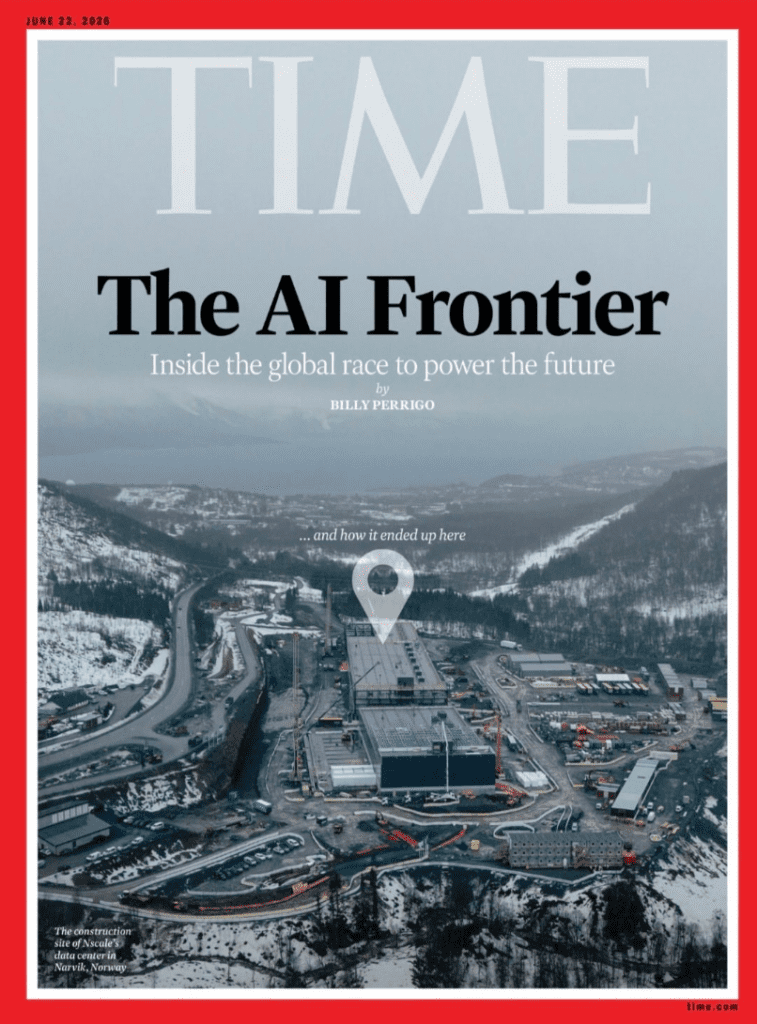
This is one of the most reliable sell signals in history.
Just look at TIME’s latest issue.
I’ve been doing this since 1981, and when I see a cover like that, I don’t get excited.
Because history has a brutal sense of humor about moments exactly like this one:
In 1979, BusinessWeek ran the most infamous cover in the history of financial journalism: “The Death of Equities.”
The argument was that inflation had broken the stock market for good and that stocks were finished as a serious place to put your money, perhaps permanently.
The country agreed and everybody gave up.
But what came next was the single GREATEST bull market in American history.
Stocks returned roughly 18% a year for the next two decades. Off the 1982 low, with dividends reinvested, the S&P went on to gain nearly 7,000%. The cover that buried equities turned out to be the starting gun.
Now look at the second cover.
In 2019. Bloomberg Businessweek puts a dead, deflated dinosaur on the front and asks “Is Inflation Dead?” The consensus was unanimous – inflation was extinct, a relic, never coming back.
3 years later we printed the WORST inflation in four decades, with prices peaking at 9.1% in June of 2022. That was the exact opposite of what the cover declared, and it happened all over again.
This is the oldest pattern there is.
By the time a story is so obvious, so universally accepted, so completely understood that the editors of a mainstream magazine slap it on the cover, every single person who was ever going to believe it already does.
So the trade is crowded, the buyers are exhausted, and there is nobody left to come in behind you and push the price higher.
The cover doesn’t predict the future the editors think they’re describing – it marks the exact moment a belief became unanimous. And unanimous belief is the textbook definition of a top.
But here’s what makes the AI cover even MORE dangerous than the two that came before it:
“Death of Equities” and “Is Inflation Dead” were business magazines, read by people already in the markets. TIME is a general-interest newsweekly read by over 100 million people who don’t trade stocks for a living.
When the AI build-out has saturated the public mind so thoroughly that it becomes the cover of TIME, the message is that there’s almost nobody left who hasn’t already heard the story and bought in.
And the fundamentals are screaming the same thing the cover is whispering:
The largest tech companies are set to spend north of $600 billion on AI infrastructure in 2026, up from roughly $388 billion just last year. Tech investment is now running near 4.4% of GDP, approaching the peak of the dot-com bubble.
These founders are literally saying that they’d rather go bankrupt than lose this race. Hundreds of billions of dollars and mountains of debt are all resting on a single untested premise – that the profits eventually show up to justify the spending. But so far they haven’t.
Now let me be honest with you, because that’s the only way I know how to do this.
I’m not telling you AI is worthless or that the whole thing collapses tomorrow. The 1979 cover was about three years early, and the real bottom didn’t arrive until 1982. The 2019 cover took two years to be proven right.
Covers mark the mood, not the exact day, so I’m not calling the top to the week.
What I am telling you is that the EASY money has already been made, the consensus is now total, and the risk and the reward have flipped upside down. When everyone you know already owns the story, the story stops being an opportunity and becomes a liability.
Mr. Market hands out a scorecard every single day, and that scorecard doesn’t care what TIME magazine believes. It only cares about valuation.
And right now the things nobody would ever put on a cover – gold, silver, energy, real assets, the unloved corners of this market – are exactly where the next decade of returns is hiding.
This is one of the most reliable sell signals in history.
Just look at TIME's latest issue.
I've been doing this since 1981, and when I see a cover like that, I don't get excited.
Because history has a brutal sense of humor about moments exactly like this one:
In 1979,… pic.twitter.com/ikYBBBKCTV
— George Noble (@gnoble79) June 17, 2026
It was almost perfect pic.twitter.com/UidNp7PGtr
— Financelot (@FinanceLancelot) June 18, 2026
According to “The Chicago Fed's National Financial Conditions Index” financial conditions are extremely loose historically.
This is why Warsh was so hawkish and didn’t deny interest rates could rise.
Our economy is addicted to low rates.
H/t @Stansberry pic.twitter.com/hzwLumGnus
— QE Infinity (@StealthQE4) June 18, 2026
"The commitment to deliver [on reducing inflation] is strong, unanimous and unambiguous. And that's, I think, an important message. We've missed for 5 years. And we're gonna fix that." – Kevin Warsh
Well said.
Now start hiking rates, end QE, and stop printing money. pic.twitter.com/rQzSI8e3zG
— Charlie Bilello (@charliebilello) June 17, 2026
ECB: Iran Peace Deal Won't Erase Europe's Energy Price Shock https://t.co/5T34R81MAh
— zerohedge (@zerohedge) June 18, 2026