Something strange is happening in the bond market.
The Fed spent years shrinking its balance sheet through quantitative tightening.
Then QT ended in late 2025.
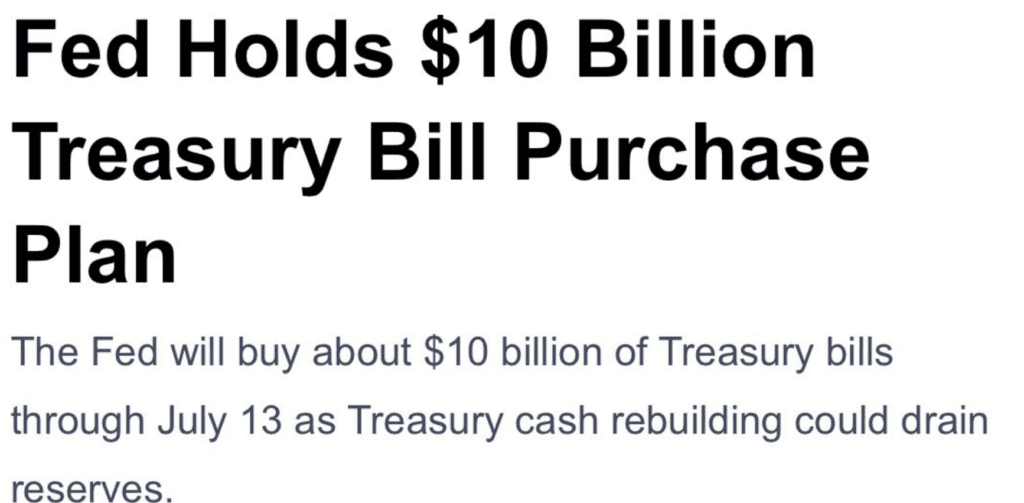
Now the Fed’s balance sheet is around $6.7 trillion and has started growing again through Treasury bill purchases designed to keep enough reserves in the banking system.
Supporters call this normal reserve management.
Critics call it “stealth QE.”
The numbers are what make people pay attention.
Recent purchases have been running around $10 billion to $40 billion per month, which puts the pace around roughly $120 billion per year depending on the month.
The Fed says the goal is not an emergency bailout like 2020.
The goal is keeping liquidity available while the Treasury market handles a massive amount of new debt issuance and refinancing.
And that is where the uncomfortable question appears.
The Treasury is facing trillions of dollars in debt rollovers, including estimates of around $9 trillion in government debt maturing over the next year, plus additional borrowing to cover deficits.
Someone has to absorb that supply.
The concern from critics is that the Fed becomes the buyer of last resort when private demand is not strong enough at current rates.
The strange part?
Stocks are near record highs.
Credit spreads remain tight.
But inflation is still above the Fed’s 2 percent target, with recent inflation pressure pushed higher by energy.
So the question becomes:
Is the Fed still focused only on fighting inflation?
Or is it also trying to keep the government debt machine running smoothly?
Because if deficits stay near trillions of dollars every year, the bond market may eventually force the next debate.
More intervention.
More liquidity.
Maybe even yield curve control.
The bigger story is not one Treasury purchase.
It is what happens when a country needs the Fed to keep the debt market stable while also promising to control inflation.
Stocks are at all-time highs.
Credit spreads are near all-time lows.
And inflation has been above the Fed's target level for 63 consecutive months, averaging over 4% per year since 2019.
So why is the Fed expanding its balance sheet again (QE)?#EndtheFed pic.twitter.com/pPpUbXDE8X
— Charlie Bilello (@charliebilello) June 21, 2026