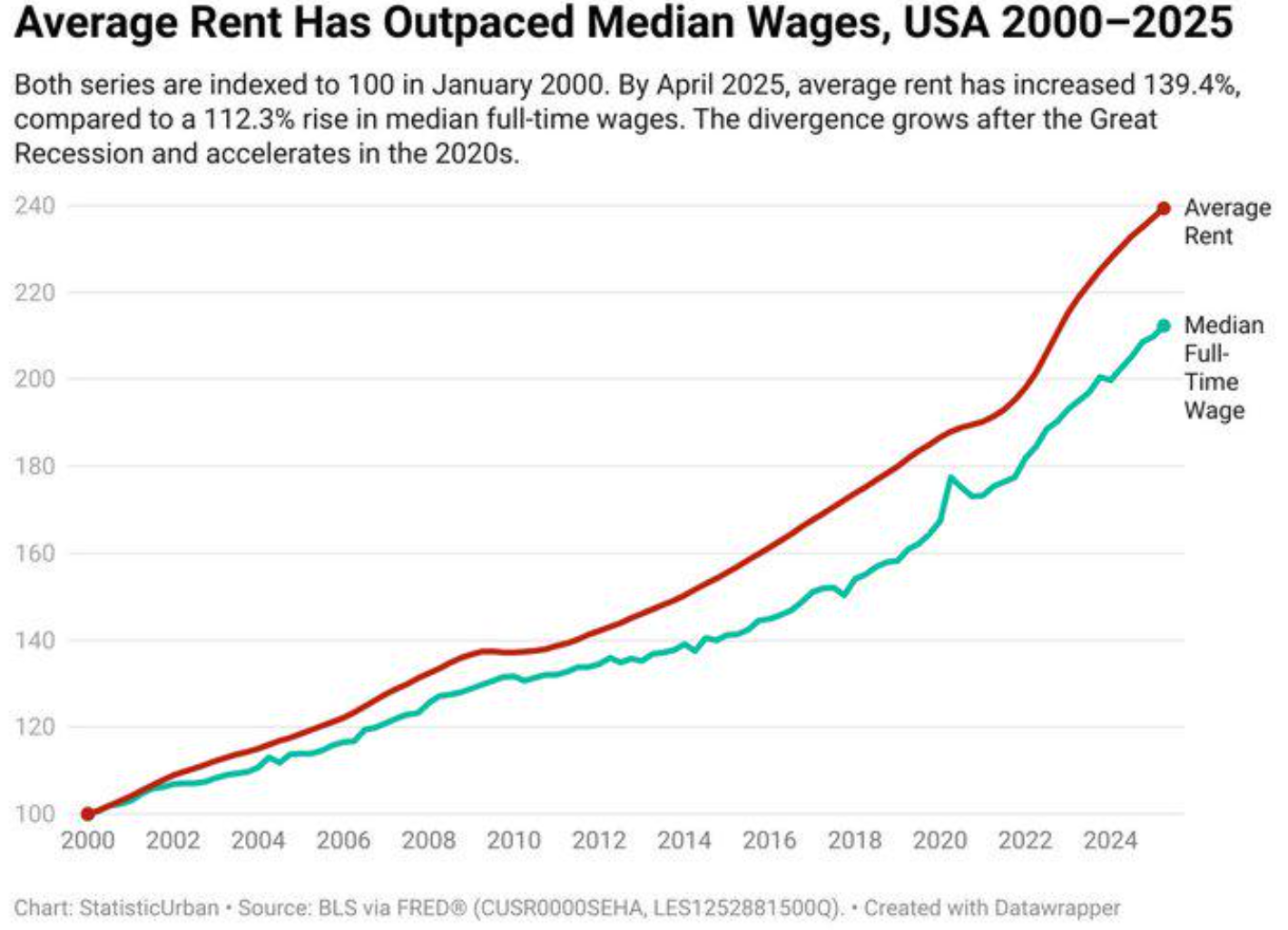
Rent vs Wage Growth Data:
“Since 2000, housing costs have been rising faster than median household income. Inflation-adjusted rents have grown steadily, to more than 20 percent above their 2000 level. Inflation-adjusted prices for single-family homes have grown even faster… In contrast, inflation-adjusted median household income barely rose over the whole time period.” Source: https://home.treasury.gov/news/featured-stories/rent-house-prices-and-demographics
Historical Rent Growth:
“The average monthly rent in the U.S. in 2024 was $1,535, up 5.11% year-over-year. From 2000 to 2025, rent prices increased with an average annual growth rate of 5.97%.” Source: https://ipropertymanagement.com/research/average-rent-by-year
Investor Ownership Impact on Housing Affordability:
“Private equity firms and REITs have acquired over 400,000 single-family homes since 2012, often outbidding individual buyers with cash offers and driving up prices… Institutional owners are more likely to file for eviction and concentrate in majority-Black neighborhoods, raising concerns about displacement and affordability.” Source: https://www.urban.org/sites/default/files/2023-08/Institutional%20Owners%20in%20Single-Family%20Rental%20Properties.pdf
Federal Reserve’s Role in Mortgage Distortion:
“The Fed’s purchase of mortgage-backed securities has distorted housing markets, inflating prices and encouraging speculative behavior… Mortgage rates are more closely tied to Treasury yields, which have remained elevated despite rate cuts.” Source: https://www.morganstanley.com/insights/articles/fed-rate-cut-mortgage-rate-impact-2025