The story everyone thought was finished is still unfolding, and the newest pieces are more disturbing than the last. Jeffrey Epstein’s financial reach was not the confined, shadowy network that official accounts implied. It was woven into mainstream banks and investment firms that most Americans trust with their savings, and the documents now surfacing show just how far the system was willing to look the other way.
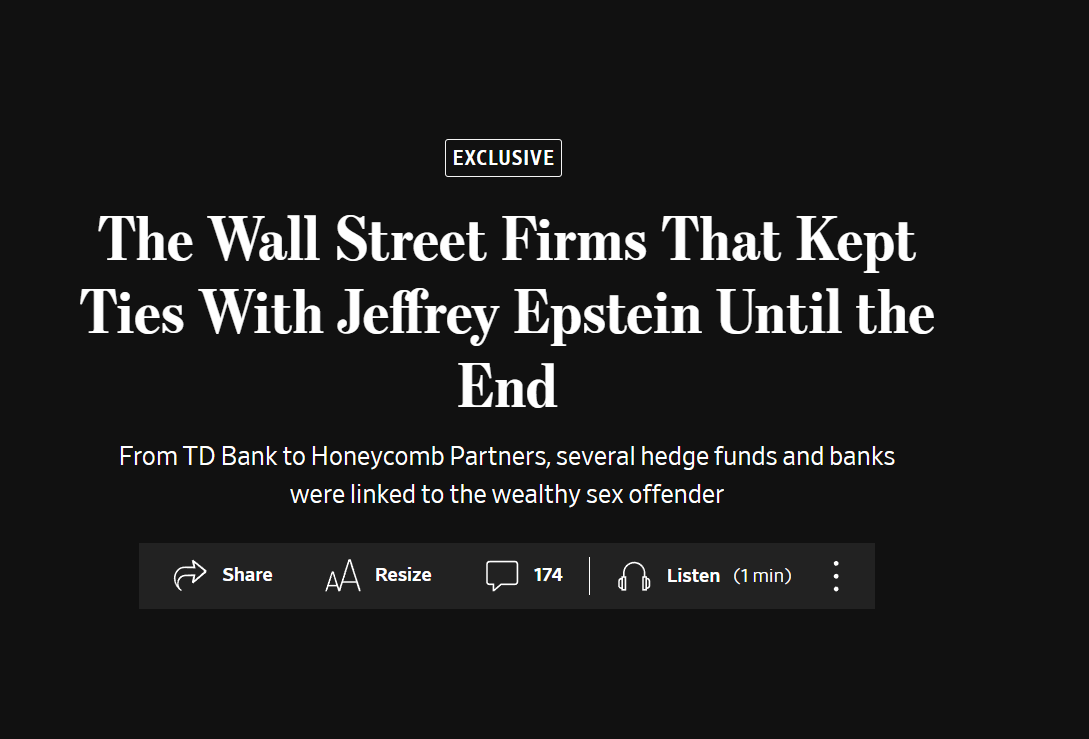
The Wall Street Journal reported that Epstein had accounts at Wells Fargo, TD Bank, and FirstBank Puerto Rico. These are not fringe institutions, yet they carried his money without breaking stride. What does it mean when banks of that size, with compliance departments built to detect risk, allow a man already under scrutiny to quietly move millions?
https://www.wsj.com/finance/jeffrey-epstein-wealth-89bf772f
The revelations do not stop there. The same records confirm that Epstein pushed at least 60 million dollars into Honeycomb Partners, and he also had large transactions with Boothbay and other private investment groups. These were not passive accounts. They were channels for high-volume deals that should have raised red flags in every regulatory office from New York to Washington.
https://www.wsj.com/finance/jeffrey-epstein-wealth-89bf772f
The scale of these transactions suggests a network that thrived not on secrecy alone but on cooperation. Either the due diligence was fatally weak or it was selectively ignored. Both options point to rot at the core of the financial system. If Epstein could launder influence and capital through respected firms even after his crimes were public, what other names are being protected right now?
The narrative told to the public has always centered on his private island, his contacts, and the lurid details of abuse. But the real machinery that enabled him was financial. Every wire transfer carried approval, every account opening required signatures, and every institution that participated benefited from fees and commissions. That silence was bought as easily as everything else.
The question that lingers is not just how Epstein built his empire, but how many people in boardrooms and compliance departments knew what they were authorizing. If this could happen in full view of some of the largest banks in America, then the safeguards meant to protect the financial system from predators are little more than theater.