The EU just voted to move the digital euro into the next stage.
It passed with 416 votes.
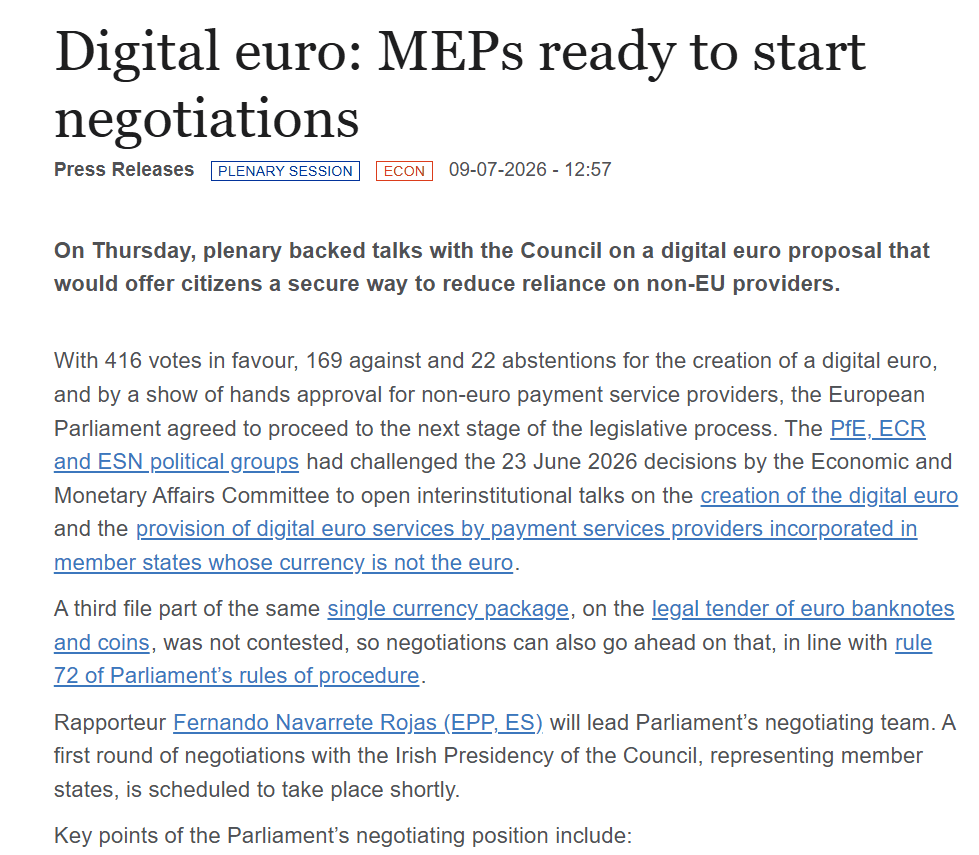
Almost every announcement came with another reminder.
Cash will stay.
Cash must be accepted.
Businesses cannot refuse it.
Countries must make sure people, especially the elderly and low income households, can still get access to cash.
Privacy will be protected.
You start noticing a pattern.
The digital euro is being sold alongside reassurance that nothing is being taken away.
At the same time, the digital version would come with holding caps to prevent people from pulling too much money out of banks.
Banks and payment providers from outside the euro area could also help distribute it.
Supporters say this is about giving Europeans another payment option and relying less on foreign payment systems.
The comments kept coming back to the same question.
If cash really is untouchable, why does every update spend so much time convincing people it is?
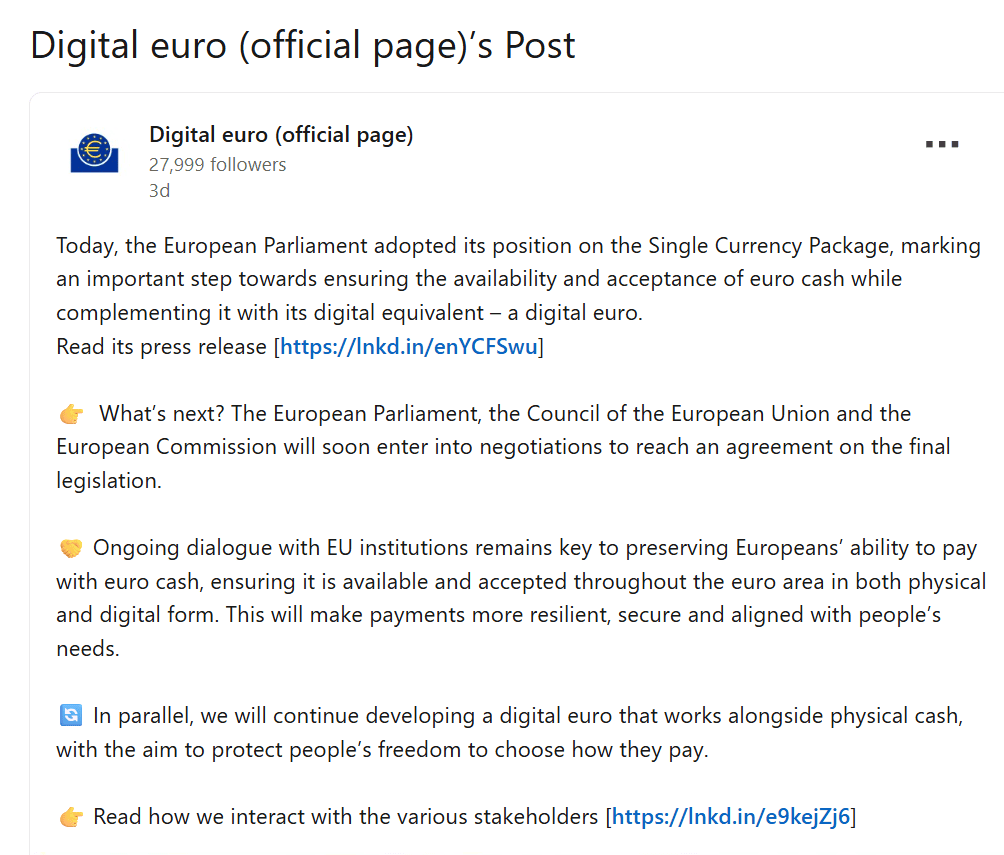
Maybe those protections stay exactly the way they are.
Maybe they get watered down during negotiations.
People are not skeptical because a digital euro exists.
They are skeptical because history usually does not move in reverse.
Checks become cards.
Cards become phones.
The old option never disappears overnight.
It just becomes a little less useful every year until most people stop reaching for it.