Something strange is happening in the AI boom.
The technology is getting cheaper.
The business around it is getting more expensive.
That contradiction is becoming harder to ignore.
The argument sounds simple.
Every new generation of AI models improves efficiency.
The cost per token falls.
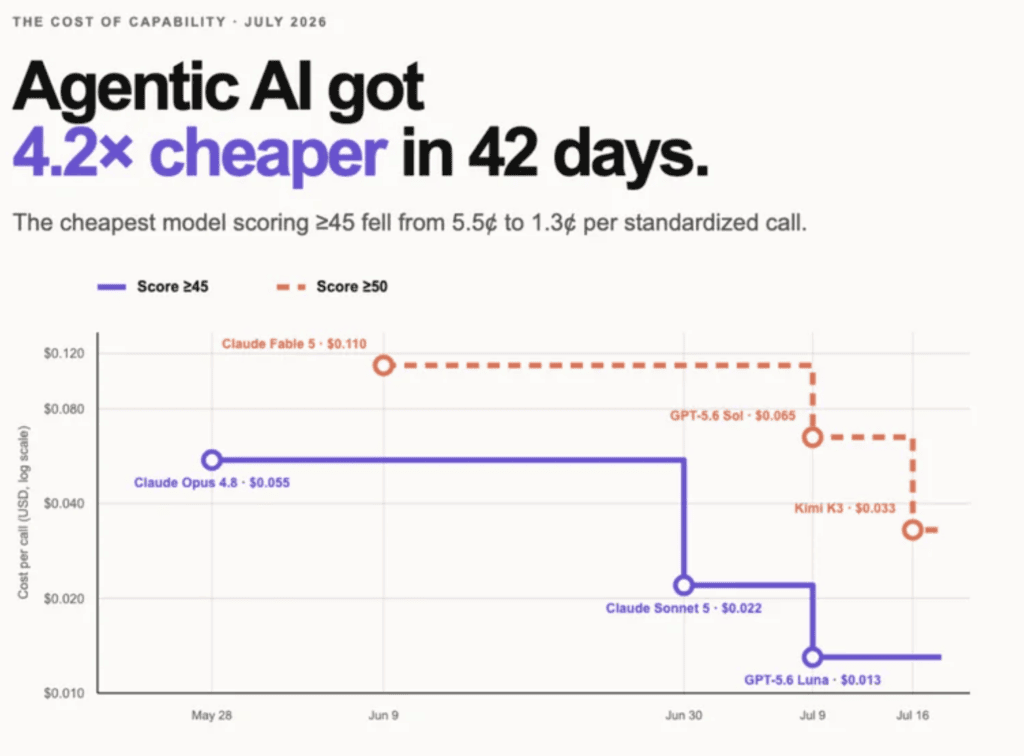
The same task requires less computing power than before.
That should make AI more profitable.
But companies building the AI economy are experiencing the opposite problem.
They are spending more money than ever.
One engineer using Claude Code described the problem from inside the industry.
The productivity boost exists, but it is not the unlimited replacement machine many investors imagine.
The bottleneck is often not writing code.
It is design decisions, meetings, stakeholder alignment, and figuring out what actually needs to be built.
AI can generate code faster.
It cannot eliminate the human process around deciding what code matters.
The cost problem gets worse at scale.
For companies paying for large AI systems, usage can explode.
One example from the discussion estimated monthly AI spending approaching $10,000 for heavy usage.
To justify that cost through productivity alone, the economic value created would need to be enormous.
That raises a bigger question.
Who exactly is paying for the AI revolution?
Individual developers?
Small businesses?
Or corporations hoping future efficiency gains eventually justify today’s spending?
Because the infrastructure bill is arriving now.
The AI race requires massive data center expansion, more advanced chips, more electricity, and more memory.
Even if the cost of computing falls over time, the total amount of computing demanded by the industry keeps increasing.
That is the part markets are watching.
AI models may become cheaper.
But building the machines that run them is becoming a trillion-dollar competition.
The industry has created a strange economic situation.
The product gets cheaper.
The factory gets more expensive.
That is why some investors are starting to question whether endless AI capital spending can continue.
Hyperscalers have been pouring enormous amounts of cash into data centers.
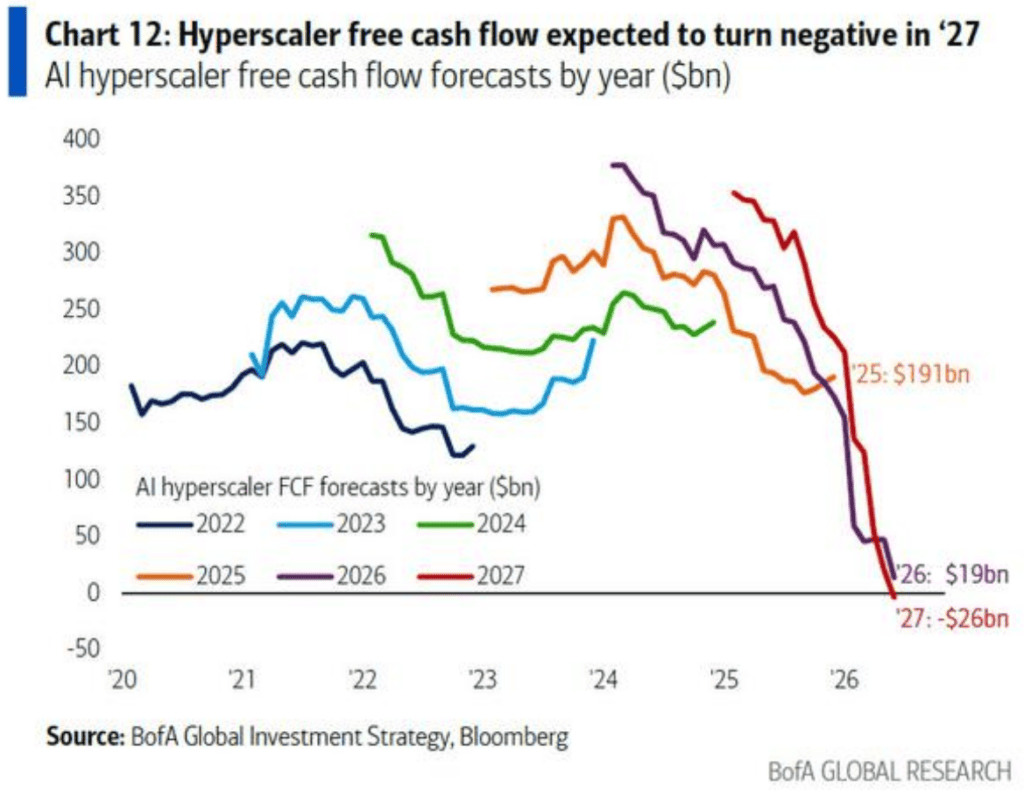
But if investors start demanding better returns, the spending cycle could slow.
And that creates a problem for companies supplying the AI buildout.
Memory makers.
Chip suppliers.
Data center equipment companies.
Many of these businesses are benefiting from shortages and rising prices today because markets are pricing in years of AI demand.
But markets look forward.
If investors believe spending will slow, those stocks can fall before the slowdown actually arrives.
This is how technology cycles usually work.
The technology improves.
The infrastructure boom arrives.
Everyone rushes to build.
Then investors start asking the uncomfortable question.
Where are the profits?
The AI industry is still growing.
The technology is still improving.
But the market is beginning to separate two different ideas that were previously treated as the same thing.
AI becoming cheaper does not automatically mean the AI economy becomes more profitable.
The next phase of the AI race may not be about who can build the biggest model.
It may be about who can prove the spending was worth it.