Update: It was the second jet today and that they landed in the UAE.
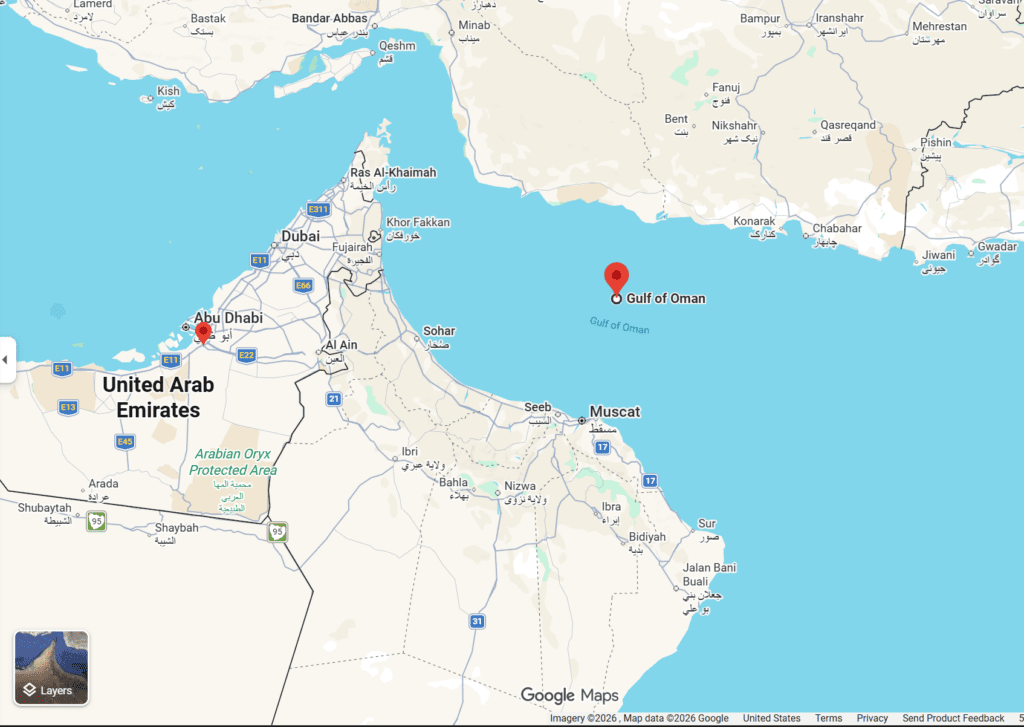
Current flight telemetry via FlightRadar24 and regional tracking reports from the Xinhua News Agency.
The frequency of these emergency transponder codes over the Gulf of Oman is moving past the point of mechanical coincidence. With two F-35 fighters squawking distress signals in a twenty-four hour window—following similar incidents with heavy tankers earlier in the week—the tactical environment near the Strait of Hormuz has clearly shifted. While the aircraft in today’s incident successfully reached Al Dhafra Air Base, the repeated loss of tracking data in this corridor points toward a persistent electronic warfare threat. Whether this is the result of advanced GPS spoofing or regional interference, the safety of the world’s most sophisticated stealth fleet is being publicly tested in one of the most contested airspaces on the planet. This pattern suggests a strategic ‘denial of signal’ that could redefine how U.S. assets operate in proximity to Iranian borders.
BREAKING: A U.S. Air Force F-35A Lightning II stealth fighter squawked emergency code 7700 over the Gulf of Oman near the Strait of Hormuz today (May 10), then went dark over UAE airspace.
The aircraft (registration 13-5067) transmitted the international emergency distress… pic.twitter.com/2RZqL6svtM
— DD Geopolitics (@DD_Geopolitics) May 11, 2026