By Peter Reagan
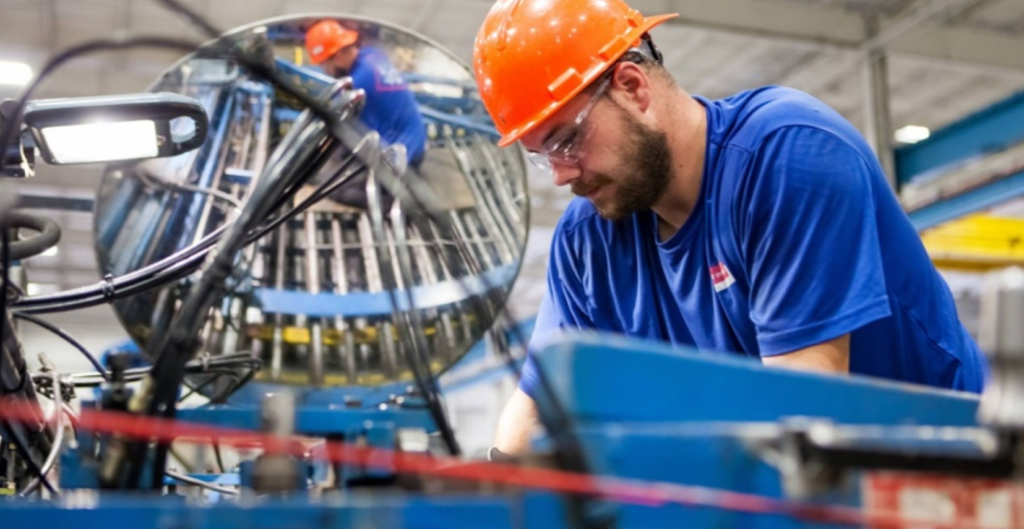
It’s always exciting news when reports come in that U.S. factory outputs are up.
For many of us who grew up with parents working factory jobs and with TV shows like Laverne & Shirley showing factory work as part of a typical (and overall good) American life, factory work is emotionally synonymous with a feeling of economic safety and security.
In fact, I’d go so far as to say factory activity is an early-warning system for the broad economy.
And that’s part of what makes this particular reporting about factory outputs interesting. It’s the details of the situation.
The devil is in the details
And, truly, that is the case around this situation.
The first thing to note is that Reuters, while reporting that factory activity is up, in the same article points out that much of what is driving the higher factory activity is that factory owners and managers are seeking to have on hand a surplus.
They’re, in essence, borrowing future factory activity and putting it into play now.
And the reason why they’re doing it is one of the details that is most concerning: “…anticipation of shortages and higher prices.”
That’s right, they’re ordering and manufacturing more now because they expect it to be more expensive in the near future to do that.
To put it another way, factory owners and managers are expecting economic challenges to come our way, even if much of the headlines don’t cover that little detail.
So, you have to ask: Do they know something that the rest of us don’t? And the answer is, yes, they likely do. Especially in their own areas of expertise. But it’s not because they have some kind of special power or prophetic gift.
No, what they do have is experience that tells them that when they see a set of signals in prices and the broader economy, then there are higher prices ahead.
When you know it’s coming your way, then the rational response is to try to prepare for it and to minimize the damage. One way they’re doing that is to put the orders in before the prices increase.
If you’re a factory CEO or a logistics expert with ample warehouse space for storage and cash to spend, that’s a great idea. (Unfortunately, beyond filling up the cupboards, my family can’t really follow suit – I can’t build up a stockpile of my next year or two’s worth of prescriptions and gasoline and so on.) Manufacturers see changing input costs, shortages and reductions in customer orders before most of us become aware of them.
That’s why I said factories and manufacturing can serve as an early-warning system for the broad economy.
We could write off this high level of factory purchasing if we wanted to – maybe the purchasing managers are just anxious? Maybe they’re overreacting?
Except industrial CEOs are taking another step that makes their concerns crystal clear…
More buying but less hiring
The other action that they’re taking in expectation of inflation is layoffs.
That’s right, manufacturing activity may be up, but manufacturing jobs are down. Quartz reports that manufacturing layoffs are at the highest level since “the early-pandemic collapse of 2020.” The worst since the 2008 Great Financial Crisis!
The worst in 18 years (again, except for the pandemic – that temporarily ended manufacturing around the world).
Sounds serious. And for those working in the factory sector especially, it is serious. After all, that factory job is often what they’re depending on to be able to feed their families and put a roof over their heads.
And those layoffs are on top of the inflation that we’re just now starting to see reports about. Reuters notes that inflation in May 2026, year over year, broke four percent for the first time in three years. The Bureau of Labor Statistics reports that May inflation hit 4.2% annualized (just 2.9% if you take out food and energy, two of my family’s biggest expenditure categories).
So, it turns out that those factory managers and owners were right: inflation is coming our way… and is already here.
Not that this knowledge helps the struggling factory worker who was just laid off.
But, wait, aren’t we also seeing reports that GDP is higher?
Yes, we are, but those reports, when you get into the details (it’s about the details again) are making the same point. A report from Reuters notes that the first quarter growth rate was revised up from 1.6% to 2.1% annualized.
That’s good news, right?
You would think so, but the same report notes that “consumer spending almost stalled.”
In other words, the growth wasn’t because the average American had more available money to spend.
So, where was the GDP growth coming from?
Certainly, some of it went into AI growth with building of data centers and AI development (about two thirds, in fact).
But factory owners and managers stockpiling their inputs also contributes to higher GDP.
Now I’m going to go out on a limb… If they’re buying ahead today, then, they’re advancing future purchases to today. That means less manufacturing purchases in the months ahead, when prices have gone up. Which is why they are laying people off now.
Not the same economy
It’s almost as if the average person is not living in an economy that has those at the top of government and corporate ladders so excited about GDP numbers.
And they aren’t living in the same economy. The average American is dealing with higher prices on necessities and facing layoffs in the manufacturing sector and other sectors making it harder to pay for those necessities.
All this while those at the top of the governmental and corporate ladders are living well. (Bloomberg reports that the top 10% of earners are making up half of all consumer spending.)
Which makes sense once you understand what the Investopedia article (via yahoo!Finance) explains. Despite the recent GDP growth, wages and salaries for U.S. workers make up the smallest share of GDP in history, according to records going back to 1947.
So, more money is being spent in the economy, but if workers’ incomes aren’t growing at the rate of GDP, where is that additional money going?
All that to say: YES, the K-shaped economy is real, and it’s not good for the average person.
When it comes to situations like this, there’s a hard truth that we need to face: When the economy isn’t working for us, then we have a responsibility to take steps to insulate your family from economic stress. Whether it’s due to inflation, rising government debt or the thinking that set the economy on this course in the first place.
When economic growth, employment, and purchasing power are increasingly moving in different directions, it’s time to consider diversification. Especially into an asset class whose value doesn’t rely on debt-based financing deals, continuous economic growth or even stable purchasing power.
The best asset class for that purpose? In my opinion, based on the historical record, it’s precious metals. If you’re new to precious metals, you can start your due diligence by educating yourself further as to why you may want to diversify into precious metals.
And if you’ve already done your due diligence and are ready to start the diversification process for yourself, simply give us a call at (877) 749-7738.