Imagine spending $73.4 billion in a single month trying to stop your currency from falling.
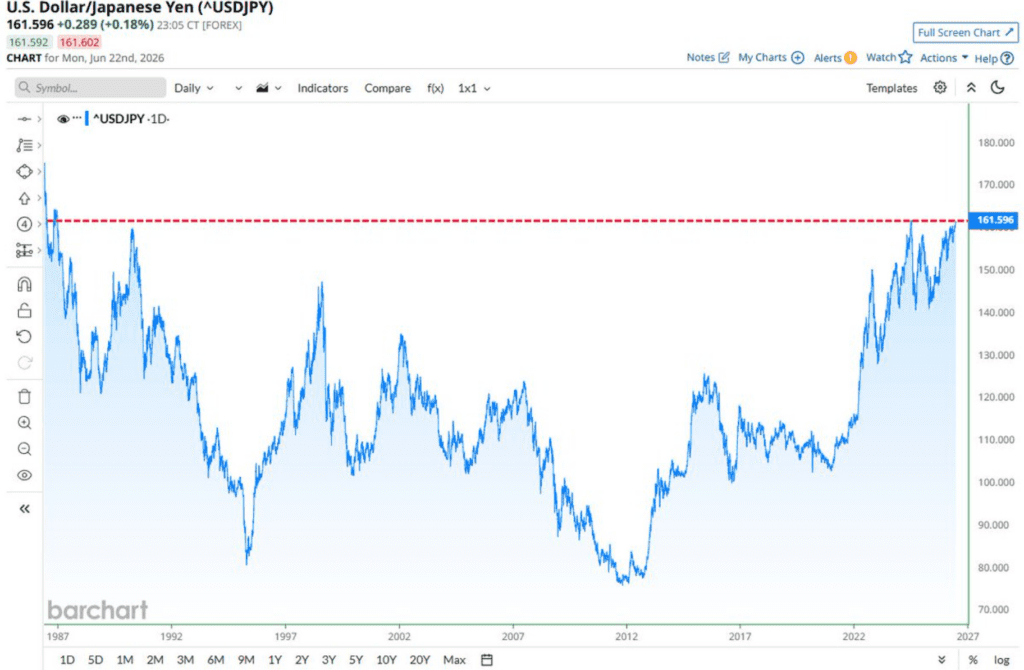
Then a few weeks later it is right back near a 40-year low.
That is basically where Japan finds itself.
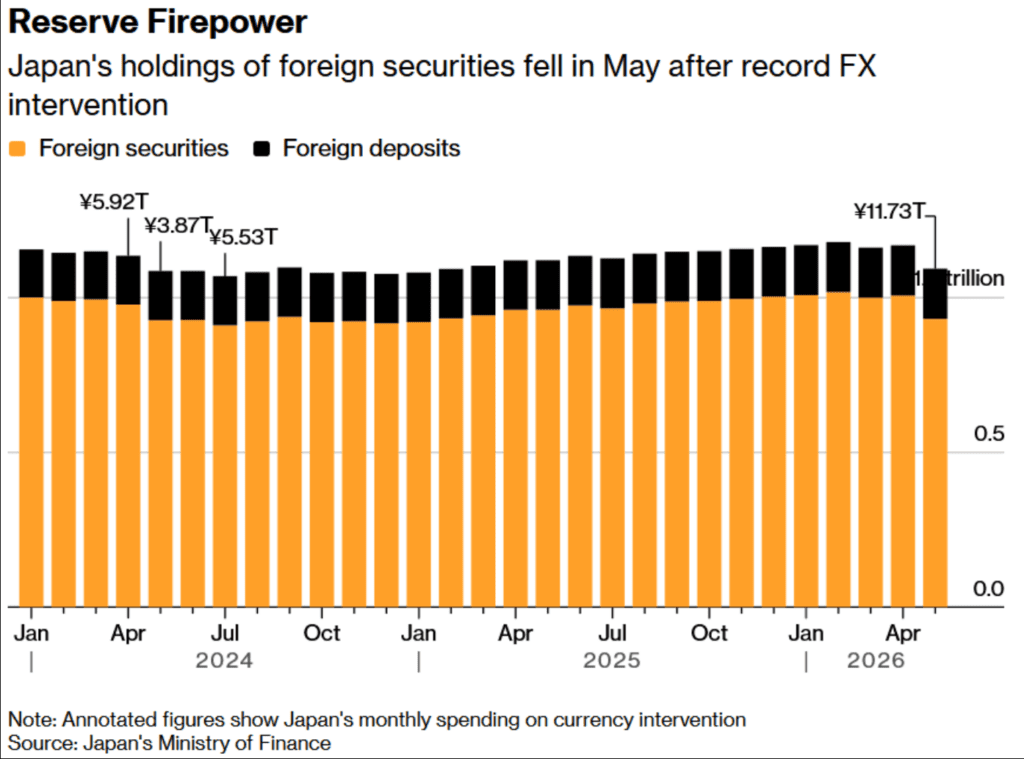
In May alone, Japan spent a record $73.4 billion supporting the yen.
The goal was simple:
Stop the slide.
Restore confidence.
Show traders the government was serious.
Yet the yen is back near 162 per dollar, one of its weakest levels since the 1980s.
At some point you have to ask a simple question:
If tens of billions of dollars cannot change the trend, what exactly is the market trying to say?
The weirdest part is happening in plain sight.
The Nikkei keeps hitting record highs.
On paper, that sounds like a success story.
But if your stock market is soaring while your currency is collapsing, are investors really voting for your economy?
Or are they voting against your money?
That is the contradiction nobody can ignore.
A stock chart can make a country look strong.
A currency chart can tell a very different story.
Japan is also selling foreign assets, including US Treasuries, to fund these interventions.
That means this is no longer just Japan’s problem.
When one of the world’s largest holders of US debt starts digging into its reserves to defend its currency, people elsewhere start paying attention.
The internet’s reaction has been brutal.
Many traders think the interventions are becoming less effective every time they happen.
Others think the Bank of Japan is trapped.
Raise rates aggressively and risk breaking something.
Keep doing what it is doing and watch the yen keep bleeding lower.
The market keeps forcing Japan into the same expensive trade.
Buy yen.
Spend billions.
Get a temporary bounce.
Then do it all over again.
That is not a solution.
That is life support.