This story is getting attention because it touches the biggest question about social media during conflicts.
Who decides what the public gets to see?
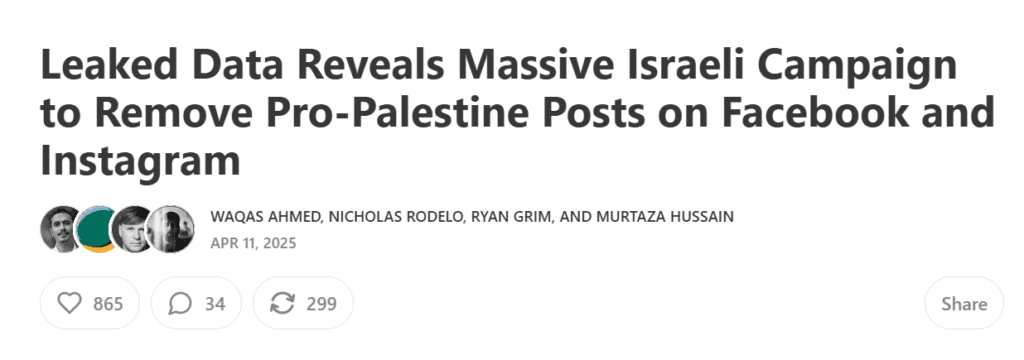
According to reporting from The Intercept and internal Meta documents they reviewed, Israel’s government sent requests to Meta to remove content during the recent war, including posts supportive of Iran, criticism of Israel, and footage showing Iranian missile impacts.
Meta approved some of those requests.
This also connects to a larger pattern.
Since October 2023, leaked data showed Meta received Israeli government requests involving more than 90,000 posts, with a reported approval rate around 94 percent.
Many of the requests were connected to Meta’s rules on terrorism, violence, or incitement.
Meta’s position is that government requests are reviewed under its own policies. A request does not automatically mean a post gets removed.
But this is why the debate keeps coming back.
Governments argue they are trying to stop dangerous content.
Critics argue that during a war, definitions of “harmful” content can become very broad and may affect political speech or documentation of events.
The important part is separating two things:
Yes, governments submit takedown requests.
Yes, platforms sometimes remove content.
The bigger question is where the line is between removing harmful material and controlling what people are allowed to see during a conflict.