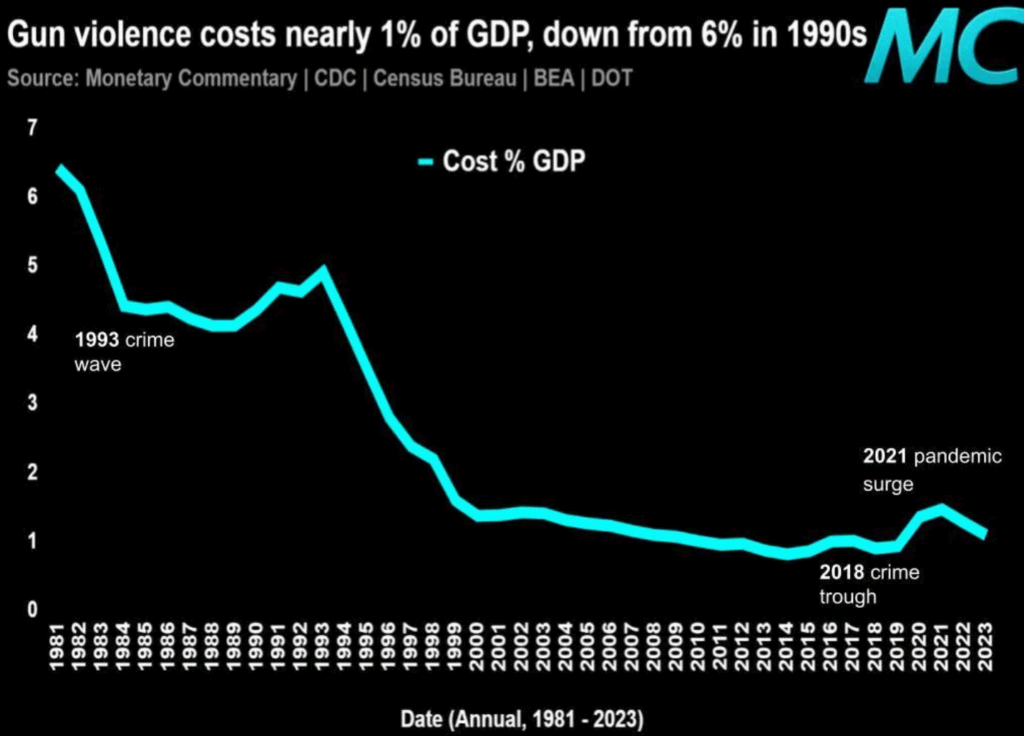
What the chart really conveys is the scale of economic drag gun violence imposes. Converting each firearm homicide into lost economic value using the government’s own VSL benchmark, the burden routinely matches or exceeds what the US spends annually on critical categories like research, infrastructure, or social safety nets.
When that ratio sits near 1% of GDP, it means a slice of national income equivalent to hundreds of billions of dollars vanishes every year — resources that could otherwise fuel investment, education or innovation.
The Kirk shooting is a visceral example of how that cost takes shape: lives cut short translate into lost years of work and earnings, trauma-induced productivity declines for survivors and communities, and higher policing and medical expenditures.
Scaled nationally, the cumulative effect is a recurring macroeconomic shock embedded in the baseline of US growth.
h/t MonetaryCommentary