Another journalist was killed in Gaza, and the same question keeps coming back.
How many journalists have to die before the world demands a real explanation?
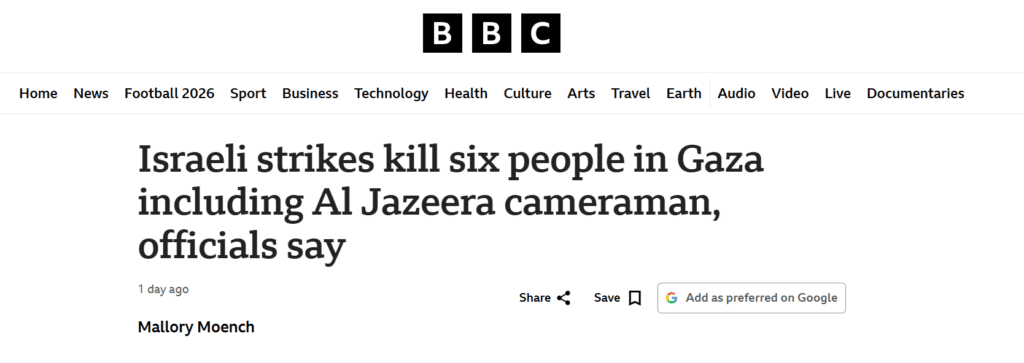
On June 20, an Israeli strike in the Bureij refugee camp killed Al Jazeera cameraman Ahmed Wishah along with at least five others, including a child.
Al Jazeera says he was deliberately targeted.
Israel says Wishah was not just a journalist and claims he was a Hamas sniper operative. The military says it carried out a precise strike against militants, but has not publicly released evidence proving that claim.
And this is where the story becomes impossible to ignore.
Since the war began, more than 260 Palestinian journalists and media workers have been killed according to press freedom groups and local organizations.
That number is not normal.
Wars are dangerous. Journalists die in conflicts. But Gaza has become one of the deadliest places in the world for reporters, and the repeated deaths of media workers have raised serious questions about Israel’s military operations.
Israel argues that Hamas operates inside civilian areas and that some journalists killed had connections to militant groups.
But critics point out something obvious:
A journalist wearing press markings is not automatically a fighter. A media worker reporting from a war zone is not a military target.
And when access for independent foreign journalists remains heavily restricted, every new strike creates more suspicion because there are fewer ways to independently verify what happened.
The debate keeps returning to the same point.
Israel says it is targeting Hamas.
Critics say the civilian cost, including the deaths of journalists, has become impossible to ignore.
The question is simple:
Why has Gaza become one of the deadliest places on Earth for journalists?