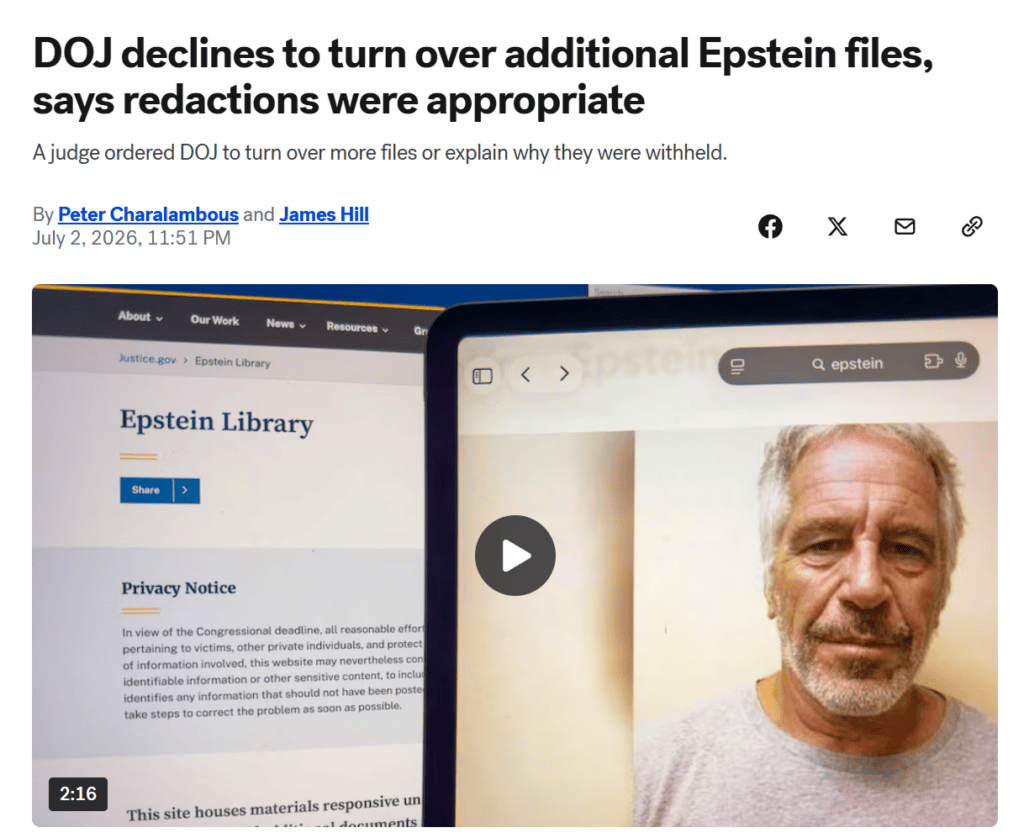
The DOJ declined to release additional unredacted documents related to Jeffrey Epstein after a judge ordered the department to either unseal more records or explain why they should remain redacted.
The department argued the existing redactions are lawful and necessary to protect victims, privacy interests, and other sensitive information.
More than 3.5 million pages have already been released, but critics argue key names and details remain hidden behind redactions.
The latest filing comes after years of public demands for greater transparency surrounding the Epstein investigation and associated records.
The dispute now centers on whether the remaining redactions are legally justified or whether additional material should be made public.
The fight has shifted from whether the records exist to how much the public is allowed to see.
As long as significant redactions remain, pressure for further disclosure is likely to continue through the courts and Congress.