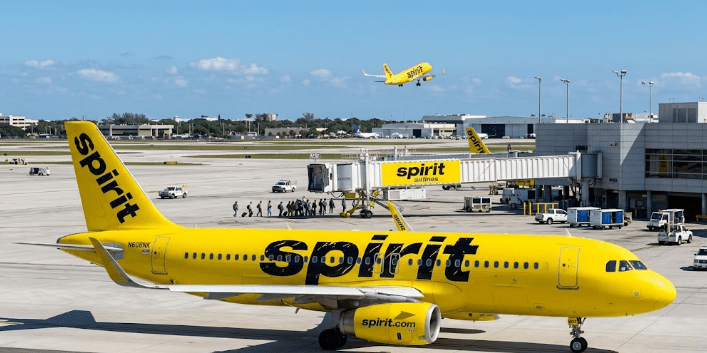
The pioneer of the low-cost model officially grounded its last jet at 3:00 AM today.
The $500M White House lifeline was pulled, creditors refused a final deal.
Thousands of passengers are stranded at gates from Las Vegas to Detroit this morning.
Aviation experts say Spirit is the first major corporate casualty, the war fuel spike.
The era of the $40 ticket just died at the gate, nobody is coming to help.
This is a brutal signal for the middle class, the sky is getting a lot more expensive.
This feels like 2008 when airlines started collapsing one after another under fuel and debt pressure.
“DANIA BEACH, Fla., May 2, 2026 /PRNewswire/ — Spirit Aviation Holdings, Inc., parent company of Spirit Airlines, LLC (“Spirit” or the “Company”), today regretfully announced that the Company has started an orderly wind-down of operations, effective immediately. All Spirit flights have been cancelled, and Spirit Guests should not go to the airport.
The wind-down follows the Company’s extensive and comprehensive efforts to restructure the business and pursue transactions to strengthen Spirit’s financial position and create a sustainable path forward. Unfortunately, despite the Company’s efforts, the recent material increase in oil prices and other pressures on the business have significantly impacted Spirit’s financial outlook. With no additional funding available to the Company, Spirit had no choice but to begin this wind-down.
“For more than 30 years, Spirit Airlines has played a pioneering role in making travel more accessible and bringing people together while driving affordability across the industry,” said Dave Davis, Spirit’s President and Chief Executive Officer. “In March 2026, we reached an agreement with our bondholders on a restructuring plan that would have allowed us to emerge as a go-forward business. However, the sudden and sustained rise in fuel prices in recent weeks ultimately has left us with no alternative but to pursue an orderly wind-down of the Company. Sustaining the business required hundreds of millions of additional dollars of liquidity that Spirit simply does not have and could not procure. This is tremendously disappointing and not the outcome any of us wanted.”
“I want to thank the Administration, in particular Secretary Howard Lutnick and the U.S. Department of Commerce, for their extraordinary efforts to try to preserve jobs and service across the country, along with the U.S. Department of Transportation for their assistance to minimize the disruption to our Guests in the days and weeks ahead,” Davis continued. “Many stakeholders have stepped up for Spirit through our restructuring. We are grateful to our labor union partners, aircraft lessors, other business partners and our financial stakeholders including Citadel, Cyrus Capital and Ares Management Corp, for working with us on tangible solutions to restructure our business.””
“The carrier pointed directly to a crippling surge in jet fuel prices, triggered by the escalating U.S.-Iran conflict, as the immediate catalyst for its demise. “Despite the Company’s efforts, the recent material increase in oil prices and other pressures on the business have significantly impacted Spirit’s financial outlook,” the statement read. “With no additional funding available to the company, Spirit had no choice but to begin this wind-down.””
“The proposed bailout is unusual because it could give the US government a large ownership position in Spirit. The package may start as a government-backed loan and later become a longer-term loan after bankruptcy. It could also include warrants that may allow the government to take up to a 90 percent equity stake in the airline.
That makes the plan politically sensitive. During the pandemic, federal airline aid supported the whole industry because travel demand collapsed across the market. Spirit’s case is different because it focuses on one financially weak airline. Supporters say the rescue could protect jobs and competition. Critics say it could set a precedent for future bailouts.”